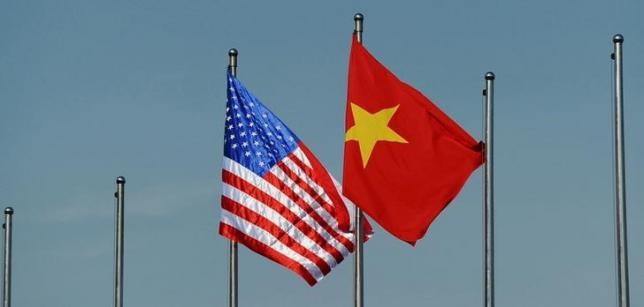

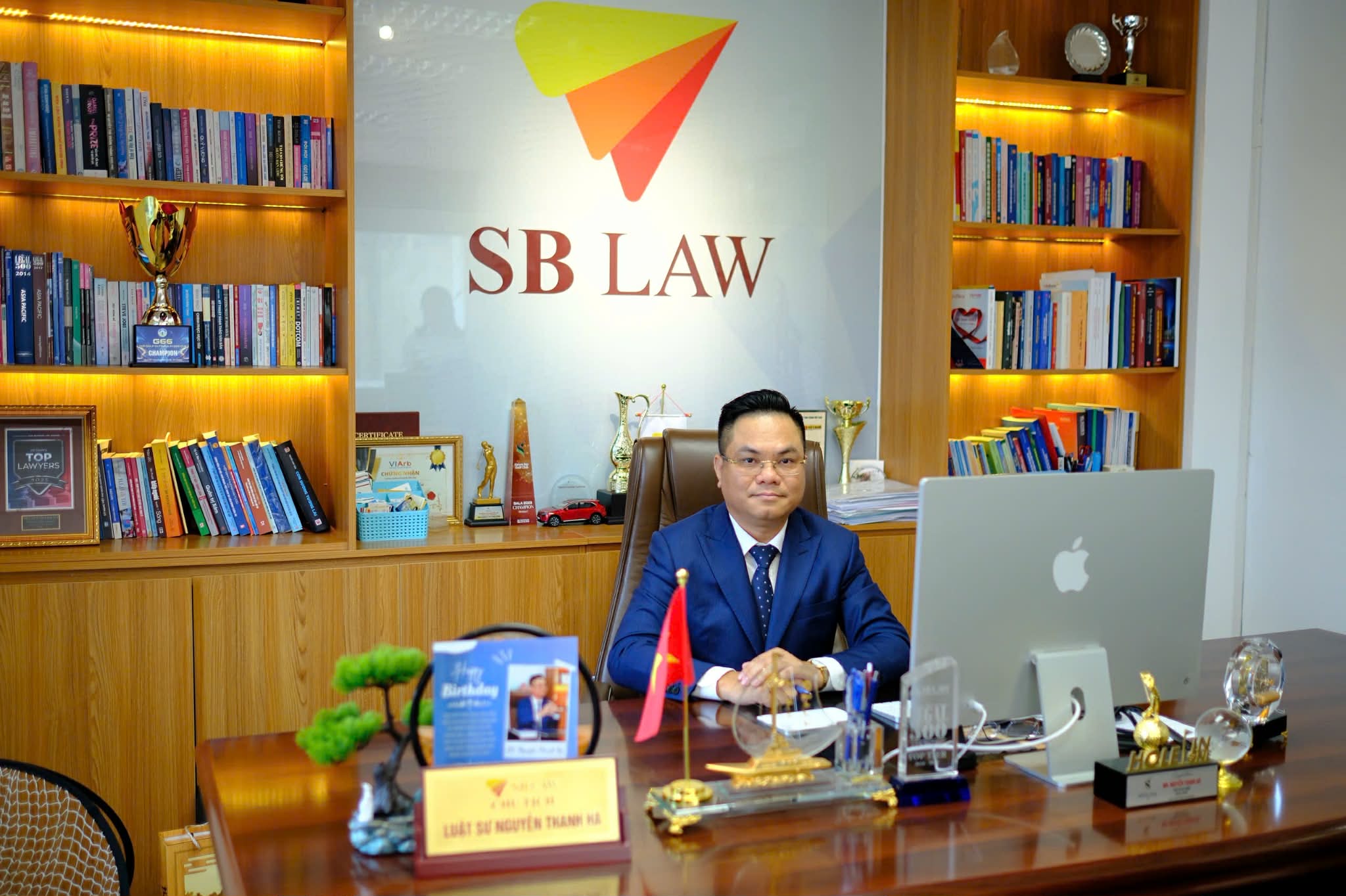
(THPL) – Lawyer Nguyễn Thanh Hà, Chairman of SBLAW, stated that as Vietnam seeks to attract high-quality investment, particularly in sectors such as technology, semiconductors, pharmaceuticals, digital content, and AI, the level of intellectual property protection is an extremely important criterion.
Vietnam’s inclusion by the United States Trade Representative (USTR) in the “Priority Foreign Country” (PFC) list in the 2026 Special 301 Report has sent a warning signal regarding the current state of intellectual property protection and enforcement.
This move by the United States not only creates significant pressure on the investment and trade environment, but also highlights the urgent need to improve the legal framework, strengthen enforcement measures, and raise awareness of intellectual property rights as Vietnam becomes increasingly integrated into global value chains.
A reporter from Trademark and Law had a discussion with Nguyễn Thanh Hà, Chairman of SBLAW, regarding this issue.)
Recently, Vietnam was warned by the United States Trade Representative regarding intellectual property protection. In your opinion, how does this affect Vietnam, especially businesses and the investment environment?
Nguyễn Thanh Hà: According to the Special 301 Report issued by the United States Trade Representative (USTR), Vietnam’s continued placement on the “Watch List” reflects the fact that the international community, particularly foreign businesses, still has concerns about the effectiveness of intellectual property rights enforcement in Vietnam.
This is not the “highest level of warning,” but it is a signal that Vietnam remains among the countries that need to continue making significant improvements to their intellectual property protection and enforcement mechanisms.
The first impact is on Vietnam’s image and investor confidence. At a time when Vietnam aims to attract high-quality investment, especially in sectors such as technology, semiconductors, pharmaceuticals, digital content, and AI, the level of intellectual property protection is a highly important criterion.
Foreign investors are often concerned about whether their patents, trademarks, data, and trade secrets will be effectively protected. If infringement remains widespread or enforcement measures lack sufficient deterrence, investors may reconsider transferring technology or establishing R&D centers in Vietnam.
However, from another perspective, Vietnam’s continued inclusion on the Watch List also creates positive pressure for stronger reforms. In reality, over the past several years, Vietnam has made significant progress in improving its legal framework and strengthening enforcement. Therefore, I believe that the international community today views Vietnam not only in terms of its “remaining weaknesses,” but also in terms of its improving trajectory and commitment to international integration in this field.
In recent years, Vietnam has made significant efforts to strengthen intellectual property protection, such as amending the Law on Intellectual Property and intensifying enforcement against violations in the digital environment. What is your assessment of these efforts by Vietnam? Which achievements do you believe are particularly noteworthy?
Nguyễn Thanh Hà: I highly appreciate Vietnam’s efforts over the past few years in improving its intellectual property system. The amendment of the Law on Intellectual Property in 2025 is a very important step toward incorporating international commitments under the CPTPP and EVFTA into domestic law, while also bringing Vietnam’s intellectual property protection standards closer to international practices.
The first noteworthy point is that Vietnam has begun shifting from a “rights registration” mindset to placing greater emphasis on “rights enforcement.” In the past, many businesses were able to register trademarks or patents but faced difficulties when dealing with infringements.
At present, enforcement mechanisms in the digital environment, procedures for requesting the removal of infringing content, as well as coordination among competent authorities, have all shown more positive developments.
Secondly, the strengthened crackdown on counterfeit goods, e-commerce violations, and copyright infringement on digital platforms is particularly remarkable. This is a challenging area due to the rapid spread of violations, the anonymity of infringers, and cross-border elements. However, in recent years, regulatory authorities have become more proactive in inspections and in coordinating with e-commerce platforms and digital service providers to control violations.
In addition, Vietnamese businesses’ awareness of intellectual property has changed significantly. In the past, many enterprises viewed intellectual property merely as a legal procedure, whereas today an increasing number of businesses regard intellectual property as a strategic asset, a competitive tool, and a means of attracting investment. This is a very positive development for Vietnam’s innovation ecosystem.
Recently, the Government has instructed ministries, sectors, and local authorities to focus resources on handling intellectual property violations under the principle of “no forbidden zones, no exceptions.” How do you assess this strong and determined stance by the Government?
Nguyễn Thanh Hà: I believe that Official Dispatch No. 38/CĐ-TTg conveys a very strong message from the Government regarding the tightening of intellectual property rights enforcement and the fight against counterfeit and infringing goods. What is particularly noteworthy is the principle of “no forbidden zones, no exceptions,” because in reality, enforcement efforts in the past have at times been fragmented, inconsistent, or insufficiently decisive in certain localities.
This strong stance is especially necessary in the current context, where intellectual property violations are no longer limited to traditional counterfeit goods but have expanded into the digital environment, livestream sales, cross-border e-commerce, digital copyright infringement, and AI-generated content copying. Without a strict and coordinated approach, such violations will be very difficult to control.
In my view, there are three key areas that require focused attention.
First is the e-commerce environment and digital platforms. These are currently “hotspots” for counterfeit goods, trademark imitation, and copyright infringement. It is necessary to strengthen the legal responsibilities of e-commerce platforms and establish fast-response mechanisms for dealing with repeat-offender online stores.
Second is improving the effectiveness of inter-agency coordination among market surveillance authorities, the police, customs, inspectors, and the courts. At present, many cases are prolonged due to overlapping jurisdiction or the lack of effective data-sharing mechanisms.