
Home Blog Page 2

Copyright Registration Service for Individuals 2026 | Protect Intellectual Property, Affirm Passion

In today’s flat world, anyone can become a content creator, an independent programmer, a book author, or a freelance musician. The brainchildren you create are invaluable assets. However, what would happen if one day, your passionate articles, the code you stayed up all night to write, or the melodies you composed were stolen and profited from by someone else?

For individual creators (Freelancers/Creators), the lack of a protective legal barrier often leaves you in a vulnerable position when disputes arise. Understanding these anxieties, SBLAW offers copyright registration services tailored specifically for individuals, helping you create with peace of mind and establish ironclad legal evidence for all your works.

  1. Which Types of Works Does SBLAW Register for Protection?

No matter which field you operate in, SBLAW, an Intellectual Property representative organization, can advise and support you in registering copyrights for a wide variety of works:

  • Writers & Researchers: Written works (books, stories, poems, articles, lectures).
  • Designers & Artists: Works of applied fine arts (personal logos), works of visual arts, photography, architectural drawings, sketches, and maps.
  • IT & Programmers: Computer programs, software, and applications.
  • Musicians, Singers & Vloggers: Musical, cinematographic, and theatrical works, audio recordings, video recordings, and broadcasts.
  1. Updated Fee Schedule for Individual Copyright Registration (Year 2026)

To provide maximum support for independent creators, SBLAW offers an extremely transparent and flexible all-inclusive fee schedule based on each type of work. The fees below include all state fees and SBLAW service fees (excluding 5% VAT):

  • Only 2,100,000 VND: Applicable to Literary/Scientific works/Textbooks, Lectures/Speeches, Journalistic works, Musical works, and Photographic works.
  • Only 3,000,000 VND: Applicable to Architectural works, Drawings related to topography/scientific works, and Works of visual arts.
  • Only 3,400,000 VND: Applicable to Cinematographic works and Theatrical works.
  • Only 3,500,000 VND: Applicable to Computer programs (software) and related rights subject matters (Audio recordings, Video recordings, Broadcasts).
  1. Documents Individuals Need to Prepare: Extremely Simple!

The biggest advantage when you register a copyright as an individual is that the dossier is extremely streamlined, requiring no complicated business licenses like those for enterprises. You only need to provide us with:

  • 02 copies of the work: Printed on paper, or if it is software, the source code burned onto a CD.
  • 02 copies of the written description: An introduction to the work, printed on paper and bound.
  • 02 copies of personal identification documents: ID card or National Citizen ID card of the author (and co-authors, if any).
  • Power of Attorney: SBLAW will provide a standard template for your signature and confirmation.
  1. All-Inclusive Service Process “From Idea to Protection Certificate”

When choosing SBLAW, you only need to focus on your creative expertise; leave all the strict administrative procedures to our team of lawyers:

  • Intensive consultation: Evaluating the type of work, guiding clients to prepare the most optimal information and documents.
  • Precise drafting: Directly drafting the entire application and declaration forms, and sending them to the client for review and supplementation before submission.
  • Legal representation: Submitting the application to the state authority on behalf of the author, closely monitoring the examination progress, and promptly making revisions or explanations if requested by the examiner.
  • Quick results: The timeframe for completing the copyright registration procedure is very fast, taking only 15 – 20 working days. SBLAW will receive the certificate and deliver it safely into your hands.

Don’t let your long nights of creativity become a “rough draft” for someone else! Establish a legal shield to protect yourself today by contacting SBLAW’s Intellectual Property experts.

  • HOTLINE: 0904.340.664 – 0906.17.17.18
  • Website: baohothuonghieu.com
  • Email: info@sblaw.vn

Exclusive “Brand Jacket”: A Successful Protection Lesson from Hai Ly Craft Beer

In the F&B (Food & Beverage) industry in general and the craft beer market in particular, delicious flavor is a necessary condition, but eye-catching packaging design is the sufficient condition for customers to decide to open their wallets. A packaging design encapsulates the soul of the product, the story of the founder, and the brand’s positioning. However, what will you do when that passionately crafted “jacket” is blatantly copied by competitors, causing consumer confusion and decreasing revenue? The successful protection story of Hai Ly Ocean Spirit Beer with the accompaniment of SBLAW is the perfect answer to this problem.

From a Passion for Brewing Craft Beer to a Mindset of Protecting Intellectual Property On the bottle label of Hai Ly Beer, there is a proud line: “Handcrafted by Mrs. Ly herself, meticulous down to every detail, this limited product celebrates the art of natural fermentation…”. For Le Thi Ly Business Household, each batch of beer is not just a beverage, but a true work of art. Recognizing that the uniqueness of the ship sailing out to sea along with the delicate color layout on the bottle label could easily be “copied” by other breweries, the brand owner decided to establish a strong legal barrier early on. And SBLAW was trusted and chosen as the companion.

On May 12, 2026, the joy became complete when the Copyright Office of Vietnam officially issued Certificate No. 4517/2026/QTG for the work: “The form of expression of the product packaging of Hai Ly Ocean Spirit Beer”. The work created by the author Le Thi Ly herself has been absolutely protected by law under the category of Work of Applied Fine Arts.

Packaging Copyright Registration: Small Investment, Big Lifesaver Many businesses often focus only on Trademark registration (Logo/Brand Name) while forgetting that registering the Copyright for the form of expression of packaging (Work of Applied Fine Arts) brings an extremely flexible and rapid protective power:

  • No long waiting: Instead of taking years like the registration procedures for Trademarks or Industrial Designs, packaging copyright registration has a statutory examination time of only 15 working days from the submission of a complete and valid dossier. You can quickly possess a “legal weapon” to launch your product into the market.
  • Thoroughly handling counterfeits: Even if a competitor intentionally changes the brand name but retains the exact layout, colors, ship imagery, or patterns on the packaging similar to Hai Ly Beer, the owner has full rights to use Certificate No. 4517/2026/QTG as ironclad evidence to request the Market Surveillance authority to confiscate and destroy the counterfeit goods.

SBLAW: Keeping Your Creativity Complete Different from dry administrative procedures, protecting a “work of applied fine arts” requires the representing organization to possess aesthetic thinking and a deep understanding of Intellectual Property Law to optimize the scope of protection for clients. At SBLAW, we simplify all legal barriers. Clients like Le Thi Ly Business Household only need to focus on brewing excellent batches of beer. The entire complex process from: Assessing the protectability of the packaging, standardizing prints, drafting strict legal guarantees, to closely monitoring the dossier at the Copyright Office is directly and comprehensively handled by SBLAW experts.

Look at the success of Hai Ly Ocean Spirit Beer – they are ready to sail out without any fear of having their identity “stolen”.

Is your product packaging securely protected yet? Don’t wait until counterfeit products appear widespread on supermarket shelves to start looking for solutions. Contact SBLAW today to turn your packaging design into an inviolable exclusive asset!

  • HOTLINE: 0904 340 664
  • Website: baohothuonghieu.com
  • Email: info@sblaw.vn

Comprehensive Copyright Registration Service for Written Works | SBLAW Successfully Protects Exclusive Medical Protocol

In the fields of healthcare, aesthetics, or scientific research, a treatment protocol or an in-depth article is not merely a culmination of intellect but also an invaluable intellectual property. It affirms the professional capacity and brand of the author as well as the enterprise. However, the theft of intellectual property and the “plagiarism” of methods are becoming increasingly common and sophisticated.

Every word and every protocol needs to be protected by solid legal barriers. SBLAW proudly serves as a professional companion, providing comprehensive copyright registration services for written works, helping to turn your creative ideas into an absolute, secure competitive advantage.

SBLAW Successfully Establishes Intellectual Property Rights for the “MULTIBEAM PRO” Protocol

A clear testament to our capability is the successful support provided to the owner, Venus High-Tech Medical and Aesthetic Joint Stock Company, and author Pham Huu Nghi in establishing copyright for the work: “ARTICLE ON THE MULTIBEAM PRO PROTOCOL USED FOR TREATING PIGMENTED BIRTHMARKS.”

Being officially granted Certificate No. 6021/2026/QTG by the Copyright Office of Vietnam on June 09, 2026 (Category: Written work) marks a significant milestone, turning research intellect into a legitimate business asset. With this certificate, the owner not only holds the exclusive right to commercial exploitation but also possesses a solid legal foundation to enforce their rights and prevent infringements.

1. What is a Written Work? Protected Categories

According to current legal regulations guiding the Intellectual Property Law, medical research papers, treatment protocols, books, textbooks, etc., are classified as “Written works”. Registering for protection will help the author and owner hold exclusive commercial exploitation rights and prevent any unauthorized copying from competitors.

2. Required Documents for Written Work Copyright Registration

To proceed with the procedures at the Copyright Office of Vietnam, clients need to prepare the following documents:

  • Copyright Registration Declaration: Using the standard form provided by the Copyright Office.

  • Legal Identity Documents: A copy of the author’s Citizen ID card and a copy of the owning organization’s Business Registration Certificate.

  • Letter of Commitment: A written commitment from the author stating the work is independently created and not plagiarized.

  • Proof of Ownership: Documents proving ownership rights (e.g., independent creation, assignment of creative tasks, creation contracts, or transfer of rights).

  • Power of Attorney: Required if the client registers the copyright through a representative organization like SBLAW.

  • Copies of the Work: 02 printed paper copies containing the full content of the work.

3. Comprehensive Registration Time and Cost

  • Issuance Time: According to regulations, it takes 15 working days from the date of submitting a valid dossier. However, the actual time may be longer due to the frequent overload of dossiers submitted to the Copyright Office. SBLAW will closely monitor the process to ensure the fastest possible appraisal time.

  • Comprehensive Cost: The copyright registration fee for 01 work at SBLAW is 2,100,000 VND (Two million one hundred thousand dongs). This fee includes both state and service fees (excluding 5% VAT), with a firm commitment to no hidden or incurred costs.

4. Specialized Copyright Registration Services at SBLAW

When choosing SBLAW, we will act on your behalf to handle the entire process from A to Z:

  1. Review and Standardize: Review the transparency of agreements between the author and owner, and standardize the technical dossier to the strictest regulations.

  2. Drafting: Directly draft all paperwork, declarations, and letters of commitment.

  3. Submission and Representation: Represent the client in submitting the dossier at the Copyright Office and promptly provide any requested explanations or additional documents.

  4. Handover: Receive the Certificate (such as Certificate No. 6021/2026/QTG) and securely hand it over directly to the client.

5. Why Choose SBLAW as Your IP Representative?

Behind every success is the dedication and professional capability of the SBLAW team in handling complex legal challenges:

  • Reputable Intellectual Property Representative: With over 15 years of experience since 2008, SBLAW has successfully assisted thousands of enterprises in protecting their intellectual assets.

  • Internationally Recognized: The Legal 500 ranks SBLAW as one of the top-tier intellectual property law firms in Vietnam.

  • Optimizing Creative Assets: We do not just stop at registration; we also provide post-registration consulting on how to exploit and protect your rights effectively.

Contact SBLAW Now to Protect Your Intellectual Property SBLAW is committed to remaining a reliable companion, empowering businesses to create with peace of mind and confidently assert their unique position in the digital economy. Do not let your research projects and treatment protocols be stolen!

  • HOTLINE: 0904 340 664

  • Website: vi.sblaw.vn

  • Email: info@sblaw.vn

Full-Service Website Copyright Registration – Protecting Digital Assets, Elevating Enterprise Value | SBLAW

In the digital economy era, a website is not just an “online store” but also an intangible asset that brings immense added value to an enterprise. However, the copying of source code and the “plagiarism” of design interfaces are widespread. To protect your brainchild, the website copyright registration process (including both the interface and source code) is a vital, life-or-death legal step.

Join SBLAW to explore the detailed forms, documentation, procedures, and full-service website copyright registration solutions in the article below!


  1. Why is Website Copyright Registration Extremely Important?

Although copyright arises automatically upon creation, owning an official Certificate of Copyright Registration provides superior legal and commercial advantages:

  • Exemption from the burden of proof: When a dispute occurs with a competitor, you will not need to waste time and expenses proving your ownership over that website.
  • Enhancing business valuation: A copyrighted website is a legitimate intangible asset, creating immense brand and enterprise value during fundraising, Initial Public Offerings (IPO), or Mergers and Acquisitions (M&A).
  1. In What Forms Are Websites Protected?

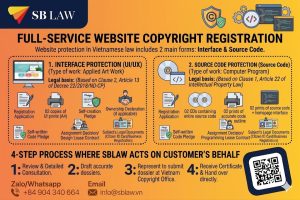
A website is a complex, composite work; therefore, website copyright is protected by law under two main forms:

  • Interface Protection (UI/UX): The design interface of a website can be registered for protection as a Work of Applied Art (Pursuant to Clause 2, Article 13 of Decree No. 22/2018/ND-CP).
  • Source Code Protection: The website’s source code is defined and protected as a Computer Program (Pursuant to Clause 1, Article 22 of the Intellectual Property Law). Computer programs are protected as independent works, regardless of whether they are expressed in source code or machine language.
  1. What Documents Need to be Prepared for Website Copyright Registration?

The registration dossier will vary depending on whether you want to protect the interface or the source code.

  1. Dossier for Website Interface Registration (Work of Applied Art)
  • Website copyright registration application form.
  • 02 printed copies of the website interface on A4 paper.
  • The author’s written commitment of independent creation regarding the interface, strictly without copying others.
  • The author’s declaration regarding the ownership of the work (if the author is also the owner).
  • Job assignment decision for the design employee (if the company is the owner) or a contract hiring a third party to create the interface.
  • Copies of the author’s ID card/Citizen Identity Card/Passport and a copy of the owner’s Business Registration Certificate (or Citizen Identity Card if the owner is an individual).
  1. Dossier for Website Source Code Registration (Computer Program)
  • 02 CDs containing the entire source code of the website.
  • 02 printed copies of the source code along with the website’s homepage interface.
  • The author’s written commitment of independent coding, without copying.
  • Job assignment decision for the programming employee (coder) or a contract hiring an external partner to design the website.
  • Copies of the author’s ID card/Citizen Identity Card (the coder).
  • Copies of the owner’s ID card/Citizen Identity Card (individual) or Business Registration Certificate (if the owner is a company).
  1. Reputable Website Copyright Registration Service at SBLAW

Legal procedures regarding intellectual property usually demand strict professional expertise. The website copyright registration service at SBLAW is committed to bringing absolute satisfaction, thanks to the dedication and professionalism of our team of lawyers and senior legal experts.

By choosing SBLAW, clients will receive:

  • In-depth consultation: Addressing all inquiries regarding registration procedures directly or via email.
  • Dossier review: Guiding preparation and assessing the legal validity of all documents provided by the client.
  • Accurate drafting: Directly drafting the registration dossier and sending it to the client for signature and approval.
  • Full-service representation: Acting on behalf of the client to carry out all working procedures with state authorities until the certificate is successfully received.
  • Comprehensive protection: Consulting on solutions to thoroughly handle acts of infringement or plagiarism of your website copyright.

Turn your creative ideas into a solid legal barrier and elevate your brand value today!

Contact SBLAW Now for Consultation:

SBLAW commits to remaining a reliable companion, helping businesses comfortably innovate and confidently assert their exclusive position on the digital economic map.

  • HOTLINE: 0904 340 664
  • Website: vi.sblaw.vn
  • Email: info@sblaw.vn

Advanced Skills in Industrial Design Consultation and Drafting

To sustain its reputation as a tier-one Intellectual Property Agent in Vietnam, SBLAW consistently prioritizes internal professional development as a core driving strategy. Every week, IP attorneys and specialists from both the Hanoi and Ho Chi Minh City offices gather to analyze legislative updates and review complex practical case studies.

As part of this ongoing professional enhancement initiative, SBLAW recently conducted an intensive technical training seminar focused heavily on the mechanics of Industrial Design protection.

1. Overview of SBLAW’s Specialized Training Session

The technical seminar was rigorously structured to unify and elevate the quality of IP services provided to global and domestic clients:

Parameters Program Details
Topic Skills on consultancy and drafting the application of industrial design
Chairperson Mr. Ly Tran Linh – SBLAW Intellectual Property Director
Time 17:00 – 18:30
Venue Main Meeting Room, SBLAW Head Office

Chaired by Mr. Ly Tran Linh—a veteran IP attorney with nearly two decades of experience navigating industrial property rights—the training targeted practical solutions to eliminate office actions and accelerate application processing times at the Intellectual Property Office of Vietnam (IPVN).

2. Core Focal Points in Industrial Design Application Drafting

Industrial designs are highly susceptible to rejections or delays if the application dossiers are inadequately structured. During the session, SBLAW’s legal team dissected several critical procedural milestones:

  • Strategic Client Consultation: Techniques to accurately guide businesses in distinguishing between Industrial Designs (protecting visual, aesthetic appearance) and Patents/Utility Solutions (protecting internal functional or structural mechanisms).

  • Standardization of Technical Drawings and Photographs: Insufficient or non-compliant drawings are the leading cause of formal defects cited by the IPVN. The session standardized the protocols for generating orthogonal views, perspective views, and cross-sections to flawlessly represent the novelty of the product.

  • The Art of Drafting Industrial Design Specifications: Methods for utilizing precise legal-technical prose to define and claim the core distinctive features of the design, ensuring maximum enforcement leverage for the client in future infringement disputes.

3. Unwavering Commitment to Quality Through Human Capital Investment

SBLAW’s relentless focus on continuous internal training underscores our deep-seated commitment to human capital. We firmly believe that every successful industrial design patent granted to our clients is a direct result of meticulous precision during the initial drafting stage.

By standardizing our internal workflows in alignment with strict international benchmarks, SBLAW’s legal team remains fully equipped to offer local enterprises and multinational corporations secure, optimized, and time-efficient intellectual property protection strategies.

Does your business require expert availability searches or need to execute industrial design registration procedures in Vietnam? Contact SBLAW today to partner with our elite team of specialists.

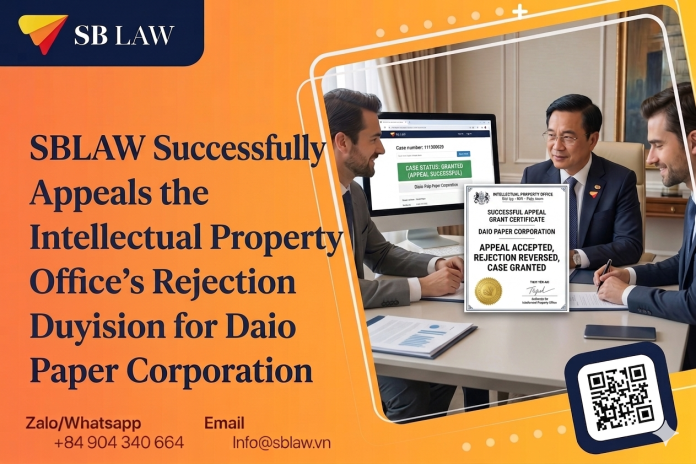
SBLAW Successfully Appeals the Intellectual Property Office’s Rejection Decision for Daio Paper Corporation

In the intellectual property registration process, receiving an office action or a refusal notice from examiners due to subjective evaluations or oversight in prior art citations is not uncommon. However, for a tier-one Intellectual Property Agent, such challenges serve as a proving ground for expertise and resilience.

SBLAW is proud to share a landmark success story in which our IP team successfully protected the legal rights of Daio Paper Corporation (Japan), overturning a refusal from the Intellectual Property Office of Vietnam (IPVN) to secure the patent grant for their renowned GOO.N diaper packaging designs.

1. Case Background: The Unexpected Refusal from the IPVN

The dispute arose after SBLAW, acting as the legal representative for Daio Paper Corporation, initiated the design filing:

  • Filing Date: On December 9, 2011, SBLAW filed two (02) industrial design applications for GOO.N diaper packaging layouts.

  • The Refusal Notice: On September 10, 2012, the IPVN issued a substantive examination result rejecting both applications.

  • The Examiner’s Ground: The IPVN claimed that the designs lacked “novelty” because they had allegedly been publicly disclosed prior to the priority filing date on a Vietnamese community forum (the website lamchame.com).

Under IP regulations, if an industrial design is publicly disclosed anywhere in the world before its filing date, it loses its novelty status and becomes ineligible for exclusive protection.

2. Sharp Counter-Arguments and Digital Evidence by SBLAW Attorneys

Refusing to settle for an inaccurate assessment, SBLAW’s IP trial attorneys immediately scrutinized the citation file and performed a deep technical audit of the targeted lamchame.com webpage.

Leveraging advanced tech-legal expertise, SBLAW uncovered a fatal flaw in the IPVN’s cited evidence and filed a formal appeal based on two critical arguments:

Demystifying the Website’s Dynamic Content Mechanism

Although the forum thread was originally created on July 23, 2011 (prior to the filing date), it was a commercial sales thread that was continuously updated. The platform metadata verified that the final content modification was made on October 29, 2012—long after the patent application had been submitted.

Gathering Verifiable Digital Evidence

SBLAW successfully extracted digital timestamps proving that the specific images of the GOO.N packaging inside that thread were only generated and uploaded to the internet in May 2012 (nearly 6 months after Daio Paper’s official filing date). Therefore, these images could not legally constitute prior art.

3. The Outcome: IPVN Reverses Decision and Intends to Grant Patents

Confronted with the irrefutable digital evidence and strict legal deductions submitted by SBLAW on December 28, 2012, the Intellectual Property Office of Vietnam completely conceded.

Shortly thereafter, the IPVN officially rescinded its refusal and issued a Notice of Intention to Grant Patents for Daio Paper Corporation’s GOO.N industrial design applications.

This triumphant outcome not only safeguarded massive commercial interests and market share for the GOO.N brand in Vietnam but also validated the elite dispute resolution capabilities of SBLAW.

If your enterprise faces application rejections, office actions, or complex IP disputes in Vietnam, contact SBLAW today for elite representation to flip the script.

Patent Registration via the PCT Treaty: A Case Study by SBLAW

Are you a Vietnamese inventor possessing groundbreaking technical solutions? Do you want to expand your products into the international market but are unsure how to protect your intellectual property rights effectively and cost-efficiently?

Patent registration via the PCT Treaty is your ultimate key. As an Intellectual Property Agent with years of extensive experience, SBLAW proudly serves as a trusted partner, assisting hundreds of Vietnamese enterprises and inventors in successfully safeguarding their intellectual property globally.

1. SBLAW – A Reputable Intellectual Property Agent for Inventors

In the era of international economic integration, protecting patents abroad has become a vital factor for business survival. However, filing applications in individual countries separately is often highly complex and cost-prohibitive.

Recognizing these challenges, SBLAW provides in-depth consulting services on the PCT (Patent Cooperation Treaty) system. This preeminent international patent filing mechanism enables inventors to:

  • Minimize initial costs by delaying local attorney fees in the early stages.

  • Extend the timeline (up to 30 months) to evaluate the commercial potential of the technology before deciding to enter the national phase of specific countries.

  • Streamline the workflow by filing a single international application in one language, valid across more than 150 member states.

2. Success Story: SBLAW Advises Inventor Pham Ngoc Quy

To demonstrate our capabilities and prestige, SBLAW is pleased to share a prominent case study highlighting our collaboration with Inventor Pham Ngoc Quy – Chairman and General Director of Green Energy Company Limited (PNQ).

A Strategic Meeting at SBLAW’s Hanoi Office

On October 6, 2015, at the SBLAW Hanoi office, Lawyer Nguyen Thanh Ha (Chairman of SBLAW) held a strategic working and consulting session directly with Inventor Pham Ngoc Quy.

About Inventor Pham Ngoc Quy: He is an exemplary scientist holding numerous valuable inventions that have been filed at the Intellectual Property Office of Vietnam (IPVN). Well aware of the importance of going global, he sought SBLAW’s expertise to find the most optimal international protection strategy for PNQ’s green technologies.

The Optimal International Patent Solution by SBLAW

During the consultation, Lawyer Nguyen Thanh Ha provided an analytical breakdown of the timeline and strategic benefits of filing a patent under the PCT. Through this mechanism, the technological assets of Green Energy Company – PNQ would be comprehensively, securely, and cost-effectively protected worldwide.

Highly appreciating the professional capacity, dedication, and practical experience of SBLAW’s patent team, Inventor Pham Ngoc Quy decided to select SBLAW as his strategic legal partner to initiate the international patent registration process at the earliest.

3. Why Choose PCT Patent Registration Services at SBLAW?

Partnering with SBLAW guarantees international-standard legal services for inventors and enterprises:

Criteria Benefits of Choosing SBLAW
Expert Team Highly experienced IP lawyers and specialists with a profound understanding of both Vietnamese and international IP laws.
Cost Optimization Designing smart PCT filing roadmaps to help businesses maximize budget efficiency.
Absolute Confidentiality Committing to absolute security for all proprietary technologies and technical data before official filing.
End-to-End Support Managing the entire lifecycle, from prior art searches and patent drafting to application prosecution at the IPVN and international phases.

If you are looking for a secure, efficient, and comprehensive global patent protection solution, contact SBLAW today for direct consultation from our leading experts.

SBLAW Successfully Registers Industrial Design for Daio Paper Corporation (Japan)

Registering intellectual property rights for foreign enterprises in Vietnam demands rigorous procedural adherence and an in-depth understanding of local jurisdictions. Recently, the specialized intellectual property attorneys at SBLAW successfully advised and secured industrial design protection for Daio Paper Corporation (JP) – one of Japan’s premier paper and diaper manufacturers – at the Intellectual Property Office of Vietnam (IPVN).

1. Official Metadata of the Protected Industrial Design

Under the legal representation and management of SBLAW, the industrial design application filed by Daio Paper Corporation has been officially granted an exclusive patent with the following technical specifications:

Criteria Detailed Information
Title of Industrial Design DIAPER PACKAGING
Patent Owner Daio Paper Corporation (Japan)
Application Number 3-2014-00206
Filing Date February 18, 2014
Number of Variants / Set 02 Variants

The successful protection of the “Diaper Packaging” design with 02 distinct design variants establishes a robust legal framework for Daio Paper Corporation. This strategic barrier comprehensively safeguards its product packaging layouts against counterfeiting, imitation, or design piracy by competitors in the Vietnamese market.

2. Strategic Benefits of Industrial Design Registration for Foreign Companies

For multinational corporations like Daio Paper Corporation, Vietnam presents a lucrative yet challenging landscape regarding intellectual property enforcement. Timely registration of an industrial design yields critical strategic advantages:

  • Establishment of Exclusive Rights: It strictly prevents unauthorized third parties from manufacturing or commercializing packaging with confusingly similar visual designs that mislead consumers.

  • Enhancement of Brand Equity: An exclusive, high-recognition packaging design functions as a valuable intangible asset, strengthening the competitive edge of Japanese diaper products in the local market.

  • Enforcement Groundwork: It provides a flawless legal basis to request immediate intervention from state enforcement authorities (Market Management Bureau, Customs, and Courts) when IP disputes or infringements arise.

3. SBLAW – A Trusted Intellectual Property Partner for Global Enterprises

Securing the industrial design patent for Daio Paper Corporation (JP) further solidifies SBLAW’s standing, brand value, and extensive track record in the Intellectual Property domain.

We take pride in acting as a secure legal gateway, empowering foreign investors (particularly from Japan, South Korea, the United States, etc.) by providing:

  • Precise preliminary industrial design availability searches prior to formal filing.

  • Document preparation and optimization of technical drawings/photographs in strict alignment with the IPVN’s rigorous legal criteria.

  • Application tracking, handling office actions, and minimizing time-to-grant bottlenecks.

If your company requires an accredited Intellectual Property Agent to register and protect industrial designs, patents, or trademarks in Vietnam and internationally, contact SBLAW today for expert legal counsel.

Patent Examination Timeline in Vietnam: Inadequacies and Expert Solutions

The prolonged patent examination process remains a major concern for many inventors and enterprises looking to enter the Vietnamese market. Having to wait years for a patent grant can lead to missed commercialization opportunities or render the technology obsolete before it even receives protection.

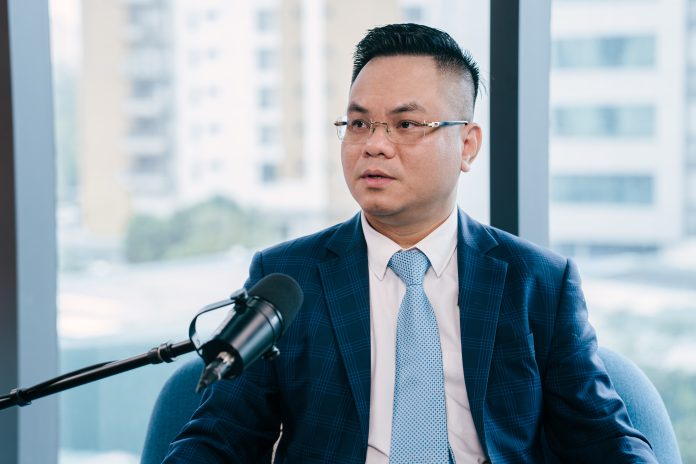
To provide readers with a comprehensive overview of this procedure as well as effective mitigation strategies, Dân Việt Newspaper conducted an in-depth interview with Mr. Nguyen Thanh Ha – Chairman of SBLAW Law Firm.

1. The Reality of Patent Registration Timelines at the IP Office of Vietnam (IPVN)

Reporter: According to current regulations, even if all procedures and fees are completed smoothly, applicants still have to wait up to 38 months (over 3 years) to obtain a patent. Meanwhile, a patent is only valid for 10 to 20 years. Could this lead to cases where the technology is already obsolete by the time mass production begins, or where counterfeiters have already reaped massive profits?

Lawyer Nguyen Thanh Ha: Under the Intellectual Property Law of Vietnam, the standard examination process for a patent application undergoes the following core phases:

  • Formality examination: 01 month from the filing date.

  • Publication of the application: In the 19th month from the filing date (or 02 months from the date of acceptance of a valid application, whichever is later).

  • Substantive examination: 18 months from the publication date.

The total examination timeline accumulates to approximately 38 months. Compared to other IP assets like trademarks (which take around 12 months), the patent registration process takes nearly three times longer.

Why is the patent examination timeline so prolonged?

This extensive duration stems from two primary causes:

  1. High Complexity: Patent examination requires specialized technical expertise and highly intricate legal assessments. Most intellectual property offices worldwide require a corresponding timeframe to ensure accuracy.

  2. Backlog of Applications: Annually, the volume of patent applications filed in Vietnam grows exponentially, whereas the number of examiners at the Intellectual Property Office of Vietnam (IPVN) has not increased proportionally to match the workload.

2. Temporary Patent Protection Rights: A Lifeline for Applicants

Reporter: Does a waiting period of over three years mean that inventors’ rights are completely unprotected against infringement during this interim stage?

Lawyer Nguyen Thanh Ha: Not necessarily. The lengthy examination process does not prevent inventors from utilizing their technology or stopping third-party infringements, thanks to the Provisional Rights mechanism.

Legal Basis for Provisional Patent Rights:

  • Clause 1, Article 131 of the IP Law: If an applicant discovers that another party is commercially exploiting their invention (without prior use rights), the applicant has the right to notify them in writing. The notice must specify the filing date and publication date to request the infringer to cease exploitation.

  • Clause 2, Article 126 of the IP Law: Any commercial use of the invention during this period without paying compensation under provisional rights regulations will be deemed an act of infringement.

Commercial Exploitation Prior to Patent Grant:

Once a patent application is officially accepted as valid and published in the Industrial Property Gazette, the applicant retains the full right to:

  • Utilize the technical solution in manufacturing and commercial operations.

  • Assign or transfer the rights of the pending patent application to a third party.

Crucial Note: While the applicant can demand that infringers immediately cease using the technology, compensation for damages incurred during the interim period can only be legally claimed after the patent is officially granted.

3. Expert Advice and Strategic Recommendations to Expedite Patent Grants

Reporter: Given these procedural challenges, what advice do you have for inventors, and do you have any policy recommendations?

Lawyer Nguyen Thanh Ha: To optimize timeframes and secure the best possible legal protection, independent inventors and businesses should proactively implement the following measures:

  • Request Early Publication: Instead of waiting until the 19th month, applicants can file a request for early publication. The invention will then be published within the 2nd month from the request date, thereby activating provisional protection rights much sooner.

  • Conduct Prior Art Searches Before R&D: This helps avoid duplicating existing technical solutions, saving significant time, capital, and labor.

  • Engage Professional Intellectual Property Attorneys: Experienced patent attorneys will assist in drafting precise patent specifications and claims from the outset. This minimizes technical errors that lead to office actions or application rejections, which significantly delay the process.

Policy Recommendation: To optimally support the startup and innovation ecosystem, I propose that the IP Office of Vietnam streamlines its workflows and leverages automation technology to reduce the substantive examination phase to 12 months instead of the current 18 months.

4. Professional Patent Registration Services at SBLAW

As a leading accredited Intellectual Property Agent in Vietnam, SBLAW is committed to partnering with global inventors to resolve complex legal hurdles:

  • Conducting comprehensive prior art and patentability searches.

  • Drafting patent specifications and claims in strict compliance with legal standards.

  • Monitoring application status, accelerating procedures, and handling office actions at the IPVN.

Contact SBLAW today to safeguard your intellectual property assets in Vietnam swiftly and securely!

Lawyer Nguyen Thanh Ha – A Leading Intellectual Property Expert And The Guardian Of Corporate Assets

In today’s knowledge-based and globally integrated economy, intellectual property (trademarks, patents, industrial designs, copyrights) has become the core lifeblood of every enterprise. However, this evolution comes with a rising tide of sophisticated and complex intellectual property (IP) infringements and disputes.

If you are seeking a steadfast legal anchor and a world-class expert to safeguard your brand, LL.M. Lawyer Nguyen Thanh Ha (Chairman of SBLAW Law Firm) is your premier choice.

1. A Top-Tier IP Expert Honored with Prestigious International Awards

With over 20 years of hands-on experience in the legal sector, Lawyer Nguyen Thanh Ha has not only steered SBLAW to become one of the most reputable law firms in Vietnam, but he is also widely recognized as a veteran Intellectual Property Lawyer. He earned his Master of Laws (LL.M.) in International Business Law from the University of Rabellais de Tour, France.

Under his strategic leadership, SBLAW’s IP practice has consistently achieved outstanding success and has been highly ranked by prestigious global legal directories:

  • The Legal 500: Consistently ranks SBLAW as a leading law firm in Vietnam for Intellectual Property.

  • Asialaw Profiles: Honors Lawyer Nguyen Thanh Ha and SBLAW for their exceptional contributions to IP protection and enforcement.

  • IFLR 1000 & Benchmark Litigation: Regularly provide highly positive reviews regarding the advisory and litigation capabilities of Lawyer Ha.

2. A Highly Respected Arbitrator – Resolving Complex IP Disputes

Beyond his role as an advisory attorney, Lawyer Nguyen Thanh Ha is an Arbitrator at the Vietnam International Arbitration Centre (VIAC).

With the sharp acumen of a commercial arbitrator, he has successfully resolved a multitude of complex intellectual property disputes, including:

  • Disputes over ownership of trademarks and trade names between major corporations.

  • Disputes arising from technology transfer contracts, licensing, and franchising agreements.

  • International domain name disputes and computer software copyrights.

Clients who turn to Lawyer Ha always receive practical solutions that maximize economic benefits while mitigating legal risks, thanks to his comprehensive 360-degree view as an industry expert.

3. The “Golden Shield” in Criminal Defense for IP Infringement Cases

One of the distinctive strengths that sets Lawyer Nguyen Thanh Ha apart is his outstanding litigation capability in criminal cases related to IP crimes (such as the large-scale manufacturing and trading of counterfeit goods).

When the boundary between a civil dispute and criminal liability becomes blurred, Lawyer Ha stands as a fierce defender of his clients in court. Leveraging his extensive courtroom experience and deep understanding of procedural law, he has successfully defended and protected the legitimate rights of numerous individuals and business owners, guiding them through critical legal crises that seemed to have no way out.

4. Looking for a Trusted Intellectual Property Lawyer? Contact Lawyer Nguyen Thanh Ha Today

Whether your business is a startup looking to secure your first trademark or a multinational corporation facing severe counterfeit issues, Lawyer Nguyen Thanh Ha and SBLAW’s elite team of IP specialists are always ready to stand by your side.

Core IP Services Spearheaded by Lawyer Nguyen Thanh Ha:

  • Comprehensive searching, evaluating, and registering exclusive trademarks, patents, and industrial designs locally and internationally.

  • IP rights enforcement, requesting competent authorities to raid, handle violations, and take down counterfeits on e-commerce platforms.

  • Representing clients in litigation at Courts or handling dispute resolutions at the Arbitration Center (VIAC).

CONTACT INFORMATION FOR CONSULTATION:

Do not let your brand and grey matter be stolen. Contact Lawyer Nguyen Thanh Ha today for the ultimate comprehensive legal protection:

  • Hotline: 0904 340 664

  • Email: ha.nguyen@sblaw.vn

  • Website: baohothuonghieu.com / sblaw.vn

  • Addresses:

    • Hanoi Office: 3th Floor, Kinh Do Tower, No. 292 Tay Son Street, Hanoi.

    • Ho Chi Minh City Office: 6th Floor, PDD Building, No. 162 Pasteur, Ho Chi Minh City.

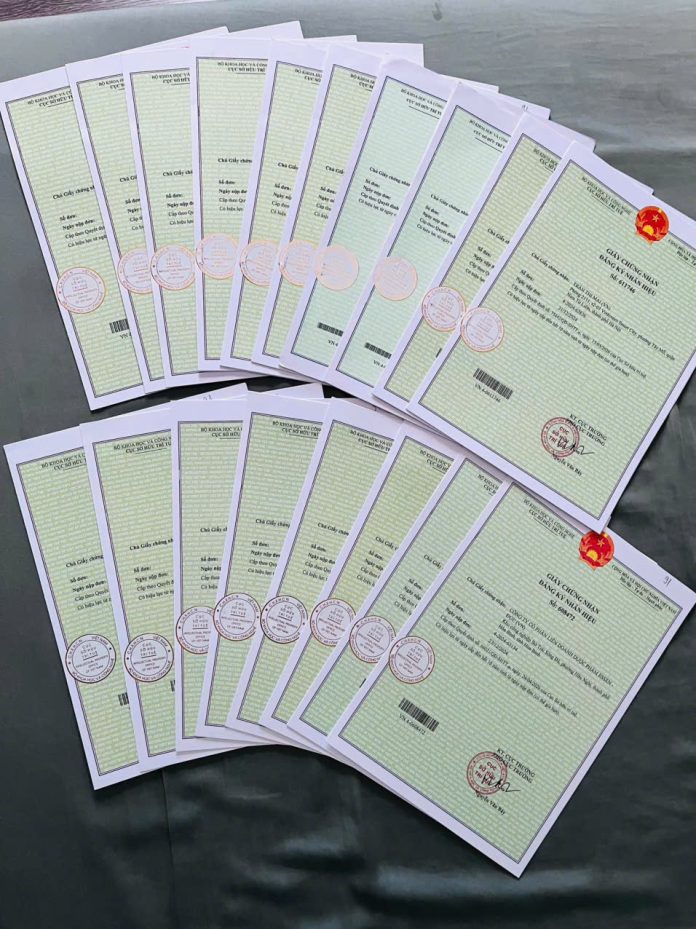
SBLAW Asserts Its Role as a Leading Intellectual Property Agent: Successfully Delivering a Multitude of Trademark Registration Certificates to Client

In today’s fiercely competitive market economy, a brand is no longer just a sign to distinguish products and services; it is a valuable intangible asset for any business. Recognizing this paramount importance, an increasing number of enterprises are proactively seeking reputable Intellectual Property (IP) Agents to establish their ownership rights.

Recently, SBLAW Law Firm proudly received and delivered a multitude of exclusive Trademark Registration Certificates from the Intellectual Property Office of Vietnam (IPVN) to our domestic and international clients. This milestone stands as a testament to legal success, establishing a robust protective corridor for our clients’ business operations.

1. Overcoming Rigorous Examination Stages at the Intellectual Property Office

The journey of a trademark from initial filing to the issuance of an official protection title is a lengthy process, typically spanning 12 to 24 months (or longer depending on the complexity of the application). Applications must pass through multiple stringent examination phases:

  • Formality Examination: Assessing the validity of the application documents, declarations, and the classification of goods/services.

  • Publication of Application: Publishing the application in the Industrial Property Official Gazette to allow third parties to file oppositions if any.

  • Substantive Examination: The most critical stage, where the distinctiveness of the trademark is evaluated to ensure it does not duplicate or cause confusion with previously protected marks.

Acting as an officially authorized IP Agent, SBLAW’s dedicated team of attorneys and specialists meticulously monitored every step of the portfolio, promptly addressing notices and countering objections from the IPVN. This proactive approach safeguarded our clients’ rights and optimized the success rate of certificate issuance.

2. Trademark Registration Certificate – The “Golden Key” to Protecting Corporate Assets

Receiving an exclusive Trademark Registration Certificate yields undeniable strategic advantages for businesses partnering with SBLAW:

  • Establishment of Exclusive Legal Rights: Businesses gain the sole right to use and commercially exploit the trademark throughout Vietnam for a 10-year term, which can be renewed indefinitely.

  • A Powerful Anti-Infringement Tool: The certificate serves as the highest legal basis to request competent authorities (Market Surveillance, Inspectors, Courts, etc.) to handle counterfeiting, imitation, and trademark infringement.

  • Enhancement of Commercial Value: A protected trademark can be valued as a corporate asset, utilized for assignments, capital contributions, or executing franchising strategies.

3. SBLAW – Your Trusted Partner in Intellectual Property

Boasting a seasoned team of experts under the strategic leadership of Lawyer Nguyen Thanh Ha – Chairman of SBLAW and member of the Vietnam Intellectual Property Association, SBLAW is proud to be ranked among the top-tier law firms providing IP services today. We deliver comprehensive solutions:

  • Conducting highly accurate preliminary and in-depth trademark searches to assess registrability prior to filing.

  • Advising on optimal classification of goods and services to ensure cost efficiency.

  • Acting as the official representative to handle all procedures and directly work with the IPVN.

  • Assisting in rights enforcement, handling disputes, and addressing trademark infringements post-issuance.

This massive delivery of Trademark Registration Certificates vividly demonstrates SBLAW’s professional competence and unwavering dedication. We pledge to continue serving as a steadfast legal anchor, empowering Vietnamese and global brands to thrive securely in the international arena.

Should your business require consultation on brand protection, please contact SBLAW via the details below for prompt and professional support.

Sblaw successfully registers intellectual property rights for musical work Intro 4corn

Music is the language of emotions, but in today’s volatile cultural industry market, emotion alone is not enough. Every single note is an intellectual asset that demands protection through robust legal barriers. SBLAW proudly affirms its position as a professional companion, having successfully assisted owner Nguyen Dieu Linh and author Khuk Ngoc Linh in establishing copyright for their musical work: Intro 4Corn.

1. Strategic Value and SBLAW’s Tailored Advisory Process

The official issuance of Copyright Registration Certificate No. 4519/2026/QTG by the Copyright Office of Vietnam on May 12, 2026, marked a milestone event. This certificate transforms the creative melodies of “Intro 4Corn” into a legally recognized commercial asset.

With this title in hand, the owner not only holds the exclusive right to exploit the work but also possesses a solid legal foundation to enforce their rights and prevent copyright infringement across digital platforms. This is precisely the strategic value that SBLAW delivers: turning the “brainpower” of artists into an absolute and secure competitive advantage.

2. SBLAW – Your Partner in Protecting and Optimizing Creative Assets

Behind this success lies the dedication and expertise of the SBLAW team in handling complex legal intricacies. We directly engaged in an intensive advisory roadmap, from reviewing the transparency of agreements between the author and the owner to standardizing technical dossiers in strict compliance with the most rigorous standards. Our deep understanding of administrative procedures allowed SBLAW to optimize the examination timeline, ensuring our clients received their protection certificates promptly and timely, while mitigating any potential risks of unnecessary disputes.

SBLAW commits to remaining a trusted companion, enabling businesses to not only create with peace of mind but also confidently assert their unique position in the digital economy.

Perspectives on intellectual property management in the 2025 IP Law

The Intellectual Property (IP) Law, as amended in 2025, officially came into effect on April 1, 2026. While previous amendments to the IP Law primarily focused on issues related to the establishment and enforcement of rights to meet practical demands and fulfill international commitments in new-generation FTAs, the 2025 amendment reveals a notable shift in legislative mindset. According to the author, the most significant difference in this Law lies in the fact that intellectual property are no longer viewed merely from the perspective of “rights needing protection,” but have been approached as a type of business asset that needs to be proactively managed, exploited, and commercialized.


It is evident that, in the context of the digital economy and where innovation is increasingly becoming the decisive factor in an enterprise’s competitiveness, lawmakers are aiming to establish a legal mechanism that encourages businesses to manage IP in the same way they manage other tangible assets. One of the clearest manifestations of this change is the new regulation in Article 8a regarding the management and exploitation of intellectual property rights, according to which “intellectual property right holders are responsible for establishing a separate portfolio for internal management of rights that do not yet meet the conditions for recognition as assets in accounting records under the provisions of accounting law.” This is a policy-oriented shift rather than a mere technical regulation.


When placed within the overall trend of modern corporate governance, this regulation carries a much greater significance. It is clear that lawmakers are sending a distinct message that intellectual property are no longer “invisible” factors only of concern when disputes occur or when registration for protection is needed, but have become a resource that needs to be inventoried, controlled, and exploited systematically.


In the past, enterprises often only focused on intellectual property once those assets had their rights established through protection titles such as Trademark Registration Certificates, Design Patents, or Invention Patents. However, in reality, many of an enterprise’s core values lie in assets that have not been “materialized” on accounting books, such as trademarks in use but not yet registered, internal software, customer databases, operational processes, trade secrets, or research and development (R&D) results currently in the completion stage.


Nevertheless, in many cases, these assets exist in a fragmented form, lacking a centralized management mechanism and depending on specific departments or individuals within the enterprise. This causes difficulties for businesses in controlling, exploiting, and protecting their assets, especially when disputes, transfers, or investment capital calls arise.

In that context, the regulation on establishing an internal intellectual property rights portfolio can be seen as a step toward encouraging enterprises to build a systematic and continuously updated internal IP inventory system. This is the core value of the new regulation, rather than just a matter of mere administrative procedure.


A systematic IP inventory system will allow enterprises to record, classify, and track all the intellectual property they hold. From this foundation, enterprises can evaluate which assets need protection registration, which have the potential for commercialization, and which require continued investment and development to form an IP portfolio with higher commercial value, often referred to as an intellectual property asset portfolio.


From a management perspective, it is noteworthy that establishing an IP portfolio does not only serve the objective of legal compliance. Furthermore, it serves as a basis for enterprises to change their view of intellectual property, from only recognizing assets that have been granted protection titles to identifying all internal creative results.


Through this systematic “data warehouse,” enterprises can screen potential assets to build a robust intellectual property portfolio, creating an advantage in commercial transactions. This is also an important testament to capacity and reputation, helping enterprises convince investors in fundraising or M&A deals thanks to transparency regarding legal status. Most importantly, this centralized recording system allows enterprises to proactively control risks, from managing protection terms to securing trade secrets and avoiding unintended legal disputes.


It can be seen that the regulation on establishing an internal intellectual property rights portfolio is not merely a new legal obligation. Furthermore, it is a sign showing the change in the way modern enterprises create and manage value. As intellectual property increasingly becomes a core factor of competitiveness, building a systematic management system will no longer be an encouraged choice, but will gradually become an inevitable requirement for enterprises in the knowledge economy.


Do you need detailed advice on procedures for intellectual property protection registration under the new Law?


👉 Contact us now for specialized support!


SBLAW – THE GUARDIAN OF BREAKTHROUGH INVENTIONS “An invention only truly has value when it is protected in the right way and at the right time.”

With a team of excellent experts who have a deep understanding of technology and law, SBLAW is committed to accompanying enterprises in turning creative ideas into sustainable business assets.


CONTACT SBLAW INTELLECTUAL PROPERTY REPRESENTATIVE:

Hotline: 0904.340.664

Email: info@sblaw.vn

Website: www.sblaw.vn

By: Vu Thi Nhat Thao

       Tran Ha My

To attract high-quality investment, intellectual property is a very important factor!

(THPL) – Lawyer Nguyễn Thanh Hà, Chairman of SBLAW, stated that as Vietnam seeks to attract high-quality investment, particularly in sectors such as technology, semiconductors, pharmaceuticals, digital content, and AI, the level of intellectual property protection is an extremely important criterion.

Vietnam’s inclusion by the United States Trade Representative (USTR) in the “Priority Foreign Country” (PFC) list in the 2026 Special 301 Report has sent a warning signal regarding the current state of intellectual property protection and enforcement.

This move by the United States not only creates significant pressure on the investment and trade environment, but also highlights the urgent need to improve the legal framework, strengthen enforcement measures, and raise awareness of intellectual property rights as Vietnam becomes increasingly integrated into global value chains.

A reporter from Trademark and Law had a discussion with Nguyễn Thanh Hà, Chairman of SBLAW, regarding this issue.)

Recently, Vietnam was warned by the United States Trade Representative regarding intellectual property protection. In your opinion, how does this affect Vietnam, especially businesses and the investment environment?

Nguyễn Thanh Hà: According to the Special 301 Report issued by the United States Trade Representative (USTR), Vietnam’s continued placement on the “Watch List” reflects the fact that the international community, particularly foreign businesses, still has concerns about the effectiveness of intellectual property rights enforcement in Vietnam.

This is not the “highest level of warning,” but it is a signal that Vietnam remains among the countries that need to continue making significant improvements to their intellectual property protection and enforcement mechanisms.

The first impact is on Vietnam’s image and investor confidence. At a time when Vietnam aims to attract high-quality investment, especially in sectors such as technology, semiconductors, pharmaceuticals, digital content, and AI, the level of intellectual property protection is a highly important criterion.

Foreign investors are often concerned about whether their patents, trademarks, data, and trade secrets will be effectively protected. If infringement remains widespread or enforcement measures lack sufficient deterrence, investors may reconsider transferring technology or establishing R&D centers in Vietnam.

However, from another perspective, Vietnam’s continued inclusion on the Watch List also creates positive pressure for stronger reforms. In reality, over the past several years, Vietnam has made significant progress in improving its legal framework and strengthening enforcement. Therefore, I believe that the international community today views Vietnam not only in terms of its “remaining weaknesses,” but also in terms of its improving trajectory and commitment to international integration in this field.

In recent years, Vietnam has made significant efforts to strengthen intellectual property protection, such as amending the Law on Intellectual Property and intensifying enforcement against violations in the digital environment. What is your assessment of these efforts by Vietnam? Which achievements do you believe are particularly noteworthy?

Nguyễn Thanh Hà: I highly appreciate Vietnam’s efforts over the past few years in improving its intellectual property system. The amendment of the Law on Intellectual Property in 2025 is a very important step toward incorporating international commitments under the CPTPP and EVFTA into domestic law, while also bringing Vietnam’s intellectual property protection standards closer to international practices.

The first noteworthy point is that Vietnam has begun shifting from a “rights registration” mindset to placing greater emphasis on “rights enforcement.” In the past, many businesses were able to register trademarks or patents but faced difficulties when dealing with infringements.

At present, enforcement mechanisms in the digital environment, procedures for requesting the removal of infringing content, as well as coordination among competent authorities, have all shown more positive developments.

Secondly, the strengthened crackdown on counterfeit goods, e-commerce violations, and copyright infringement on digital platforms is particularly remarkable. This is a challenging area due to the rapid spread of violations, the anonymity of infringers, and cross-border elements. However, in recent years, regulatory authorities have become more proactive in inspections and in coordinating with e-commerce platforms and digital service providers to control violations.

In addition, Vietnamese businesses’ awareness of intellectual property has changed significantly. In the past, many enterprises viewed intellectual property merely as a legal procedure, whereas today an increasing number of businesses regard intellectual property as a strategic asset, a competitive tool, and a means of attracting investment. This is a very positive development for Vietnam’s innovation ecosystem.

Recently, the Government has instructed ministries, sectors, and local authorities to focus resources on handling intellectual property violations under the principle of “no forbidden zones, no exceptions.” How do you assess this strong and determined stance by the Government?

Nguyễn Thanh Hà: I believe that Official Dispatch No. 38/CĐ-TTg conveys a very strong message from the Government regarding the tightening of intellectual property rights enforcement and the fight against counterfeit and infringing goods. What is particularly noteworthy is the principle of “no forbidden zones, no exceptions,” because in reality, enforcement efforts in the past have at times been fragmented, inconsistent, or insufficiently decisive in certain localities.

This strong stance is especially necessary in the current context, where intellectual property violations are no longer limited to traditional counterfeit goods but have expanded into the digital environment, livestream sales, cross-border e-commerce, digital copyright infringement, and AI-generated content copying. Without a strict and coordinated approach, such violations will be very difficult to control.

In my view, there are three key areas that require focused attention.

First is the e-commerce environment and digital platforms. These are currently “hotspots” for counterfeit goods, trademark imitation, and copyright infringement. It is necessary to strengthen the legal responsibilities of e-commerce platforms and establish fast-response mechanisms for dealing with repeat-offender online stores.

Second is improving the effectiveness of inter-agency coordination among market surveillance authorities, the police, customs, inspectors, and the courts. At present, many cases are prolonged due to overlapping jurisdiction or the lack of effective data-sharing mechanisms.

Third is the need to strengthen deterrence. Some of the current sanctions are still not proportionate to the profits gained from infringements.

In your opinion, what solutions are needed to comprehensively address the problem of intellectual property infringement?

Nguyễn Thanh Hà: In my opinion, effectively and sustainably addressing intellectual property infringement requires a combination of multiple solutions rather than relying solely on administrative sanctions.

First of all, it is necessary to continue improving enforcement mechanisms, particularly in the digital environment. Regulations on the responsibilities of intermediary platforms, notice-and-takedown mechanisms, handling cross-border infringements, and the use of electronic evidence need to be clearer and more practical.

Second, the enforcement capacity of competent authorities should be strengthened. Intellectual property is a highly specialized field, especially in relation to technological inventions, software, AI, and digital data. Therefore, specialized training should be provided for inspectors, market surveillance forces, investigators, and judges to ensure more consistent and effective enforcement.

Third, it is important to promote civil litigation mechanisms and meaningful compensation for damages. In many countries, businesses are deterred from infringement because of the risk of substantial compensation claims. In Vietnam, however, the actual compensation awarded in practice remains relatively low and therefore lacks sufficient deterrent effect.

Finally, the most important factor is still raising public awareness. If consumers continue to easily accept counterfeit goods, pirated software, or copyright-infringing content, it will be very difficult to address the problem at its root. Intellectual property is not only a legal issue but also a matter of fostering a culture that respects creativity and fair competition within the economy.

Thank you very much!

MAJOR REFORM: Trademark registration in Vietnam to become faster and simpler from 2026

Starting April 1, 2026, the Law on Intellectual Property No. 131/2025/QH15 will officially take effect. This is considered a “breakthrough reform” aimed at significantly reducing waiting times for trademark and patent owners in Vietnam.

What exactly does this change entail, and how will your business benefit? Let’s explore the highlights with SBLAW.

1. The “Bottleneck” of Old Regulations (Pre-April 2026)
Currently, when you file a trademark application, the Intellectual Property Office of Vietnam (IP Vietnam) must undergo a mandatory administrative step: Formality Examination.

The Old Process: After checking the application, the Office must draft and issue an official document titled “Decision on Acceptance of Valid Application.”

The Downside: Waiting for this physical document often creates an unnecessary administrative “pause,” prolonging the overall registration timeline even if your application was perfectly prepared from the start.

2. The Breakthrough Change (Post-April 2026)
The most significant reform is: The abolition of the procedure to issue a formal Notification/Decision on the Acceptance of a Valid Application.

Simply put: If your application is correct, the system keeps moving automatically!

The New Mechanism: Instead of waiting for the Office to “sign off” on a validity document, your application will automatically proceed to the next stages (Publication and Substantive Examination).

The Office only intervenes if there are errors: Official notifications will only be issued if your application falls into “invalid” categories, such as:

Formal errors (missing information, incorrect forms, etc.).

The subject matter is ineligible for protection.

The applicant lacks the right to file.

Filing in violation of prescribed methods.

Crucially: Failure to pay the required fees and charges.

3. Practical Benefits for Businesses
✅ Time-Saving: By eliminating the wait for a physical document, applications are processed continuously, shortening the total time to receive a protection certificate.
✅ Reduced Red Tape: Businesses no longer need to manage auxiliary administrative notifications, focusing directly on the final examination results.
✅ International Integration: This process aligns with the standards of developed nations, where transparency and speed are top priorities

💡 Expert Advice from SBLAW Attorneys:
While the new law makes the process “smoother,” if an application is deemed “Invalid” from the outset, you will lose your Priority Date—the most vital factor in trademark disputes.

Therefore, before filing, you should ensure:

Conducting professional trademark searches to avoid ineligible subject matter.

Double-checking all formal requirements and paying all fees/charges at the time of filing.

Want to be among the first businesses to take advantage of this reform wave? Contact SBLAW today for an optimal trademark protection roadmap!

#SBLAW #IPLaw2025 #TrademarkRegistration #AdministrativeReform #VietnamIP #BrandProtection