China National Intellectual Property Administration Amended GUIDELINES FOR PATENT EXAMINATION (2025)

Recently, China National Intellectual Property Administration (CNIPA) has issued a decision on amending  the GUIDELINES FOR PATENT EXAMINATION (Order No. 84 of the CNIPA). The newly amended GUIDELINES FOR PATENT EXAMINATION will  take  effect on January 1, 2026. The amendments focus on  improving  patent examination  standards and optimizing examination rules  for new fields and  new business formats, covering  aspects including inventor identity information, ethical  review of artificial intelligence, disclosure and assessment of inventive step  for inventions relating to  algorithms and data, patent examination of streaming media video encoding bitstream,  evaluation criteria  for inventive step, patent protection scope of plant varieties and cultivated biological varieties, adjustments to the system for applications filed on the same day, and systematic optimizations such as invalidation procedures and refund rules. The following is a comparison table for part of the amendments:

Guidelines for Patent Examination

(Order No. 78 of the CNIPA)

Guidelines for Patent Examination

(Amended in accordance with Order No. 84 of the CNIPA)

Part I, Chapter 1

4.1.2 Inventor

As prescribed in Rule 14, the inventor refers to the person who has made creative contributions to the substantive features of an invention-creation.The examiner does not examine whether or not the inventor whose name is filled in the request meets the requirements of the above provision in the examination procedures at the Patent Office.

The inventor shall be an individual, and the name of an entity, organization, or artificial intelligence shall not be filled in the request. For example, it shall not be filled in as “xx project group” or “Artificial Intelligence xx”, etc…

Part I, Chapter 1

4.1.2 Inventor

As prescribed in Rule 14, the inventor refers to the person who has made creative contributions to the substantive features of an invention-creation. It is not allowed to fill in a false inventor. The examiner generally does not examine whether or not the inventor whose name is filled in the request meets the requirements of the above provision in the patent examination procedures, unless there is evidence indicating that the inventor whose name is filled in the request does not meet the above provision.

The inventor shall be an individual (i.e., a natural person). The identity information of all inventors shall be filled in the request, and the information shall be accurate. The name of an entity, organization, or artificial intelligence shall not be filled in the request. For example, it shall not be filled in as “xx project group” or “Artificial Intelligence xx”, etc.

Part II, Chapter 1

4.4 Animal and Plant Varieties

Animals and plants are living things. According to Article 25.1(4), no patent rights shall be granted for animal and plant varieties.  The animal referred to in the Patent Law does not include humans, and it refers to the life form that cannot synthesize carbohydrates and proteins by itself but maintains life only by absorbing natural carbohydrates and proteins.  The plant mentioned in the Patent Law refers to the life form that maintains its life by synthesizing carbohydrates and proteins from inorganic compounds, such as water, carbon dioxide, and inorganic salt, through photosynthesis, and is usually immovable. Animal and plant varieties can be protected under other laws and regulations besides the Patent Law. For example, new plant varieties can be granted protection under the Regulations on the Protection of New Varieties of Plants.

Part II, Chapter 1

4.4 Animal and Plant Varieties

Animals and plants are living things. According to Article 25.1(4), no patent rights shall be granted for animal and plant varieties.  The animal referred to in the Patent Law does not include humans, and it refers to the life form that cannot synthesize carbohydrates and proteins by itself but maintains its life only by absorbing natural carbohydrates and proteins. The plant variety mentioned in the Patent Law refers to a plant population that is artificially bred or discovered and improved. It has consistent morphological and biological characteristics and relatively stable genetic traits.  The life form that maintains its life by synthesizing carbohydrates and proteins from inorganic compounds, such as water, carbon dioxide, and inorganic salt, through photosynthesis, and is usually immovable. Animal and plant varieties can be protected under other laws and regulations in addition to the Patent Law. For example, new plant varieties can be granted protection under the Regulations on the Protection of New Varieties of Plants.

Part II Chapter 3

6.2.2 Handling of One Application and One Patent

However, where an applicant files on the same day (means the date of filing) applications for both patent for utility model and patent for invention relating to the identical invention-creation, if the patent for utility model has been granted and does not terminate, and the applicant has stated the fact respectively upon filing the applications, double patenting may be avoided by amending the invention application, or alternately by abandoning the patent for utility model. Therefore, during the examination of the invention application mentioned above, if the invention application has met all the other conditions for patentability, the applicant shall be notified to make a choice or make amendments. Where the applicant chooses to abandon the patent for utility model which has been granted, he shall submit a written declaration to abandon the patent for utility model at the time of making response to the Office Action. In this case, the examiner shall issue Notification to Grant Patent Right regarding the invention application which has met all the conditions for patentability but has not been granted yet, and transfer the written declaration of abandoning the patent for utility model mentioned above to the relevant examination departments for registration and announcement by the Patent Office. In the announcement, it shall be indicated that the patent right for utility model mentioned above ceases from the date of the announcement of grant of the patent for invention.


Part II Chapter 3

6.2.2 Handling of One Application and One Patent

However, Where an applicant files on the same day (means the date of filing) applications for both patent for utility model and patent for invention relating to the identical invention-creation, in accordance with the provision of Rule 47, the applicant shall state respectively upon filing the application that another patent application for the identical invention-creation has been filed; where no such statement is made, the issue shall be handled in accordance with the provision of Article 9.1 that for any identical invention-creation, only one patent right shall be granted; where such a statement is made, and it is found upon examination that there is no grounds for rejection of the invention application, the applicant shall be notified to declare the abandonment of the patent for utility model within the specified time limit. Where the applicant declares to abandon the patent for utility model, a decision of grant of the patent for invention shall be made, and when an announcement of grant of the patent for invention is made, the declaration that the applicant has abandoned the patent for utility model shall also be announced. Where the applicant refuses to abandon the patent for utility model, the invention application shall be rejected. Where the applicant fails to respond within the time limit, it shall be deemed that the invention application has been withdrawn. if the patent for utility model has been granted and does not terminate, and the applicant has stated the fact respectively upon filing the applications, double patenting may be avoided by amending the invention application, or alternately by abandoning the patent for utility model. Therefore, during the examination of the invention application mentioned above, if the invention application has met all the other conditions for patentability, the applicant shall be notified to make a choice or make amendments.

Where the applicant chooses to abandons the patent for utility model which has been granted, he shall submit a written declaration to abandon the patent for utility model at the time of making a response to the Office Action. In this case, the examiner shall issue a Notification to Grant Patent Right regarding the invention application, which has met all the conditions for patentability but has not been granted yet, and transfer the written declaration of abandoning the patent for utility model mentioned above to the relevant examination departments for registration and announcement by the Patent Office. In the announcement, it shall be indicated that the patent right for utility model mentioned above ceases from the date of the announcement of grant of the patent for invention.

Part II Chapter 4

6.4 Examination on the Claimed Invention

The determination of whether an invention involves an inventive step shall be directed at the claimed invention. Therefore, the evaluation of inventive step shall concern the technical solutions as defined in the claims. The technical features by which the invention makes contribution over the prior art, such as the technical features bringing about unexpected technical effects for the invention, or the technical features reflecting how the invention overcomes a technical prejudice, shall be included in the claims; otherwise, they shall not be taken into account in evaluating the inventive step of the invention, even if they have been set forth in the description. Moreover, the evaluation of inventive step shall be directed to the whole of each technical solution defined in the claims, that is, it is the technical solution as a whole, rather than the individual technical features, that shall be evaluated as to whether involving an inventive step.


Part II Chapter 4

6.4 Examination on the Claimed Invention

The determination of whether an invention involves an inventive step shall be directed at the claimed invention. Therefore, the evaluation of inventive step shall concern the technical solutions as defined in the claims. The assessment of inventive step shall be directed to the whole of each technical solution defined in the claims, that is, it is the technical solution as a whole, rather than the individual technical features, that shall be evaluated as to whether it involves an inventive step.

The technical features by which the invention makes contribution over the prior art, such as the technical features bringing about unexpected technical effects for the invention, or the technical features reflecting how the invention overcomes a technical prejudice, shall be included in the claims; otherwise, they shall not be taken into account in evaluating the inventive step of the invention, even if they have been set forth in the description. Moreover, the evaluation of inventive step shall be directed to the whole of each technical solution defined in the claims, that is, it is the technical solution as a whole, rather than the individual technical features, that shall be evaluated as to whether involving an inventive step. The features that do not contribute to solving the technical problem generally do not affect the inventive step of the technical solution, even if they are included in the claims.

Part II Chapter 9

6.1.1 Examination According to Article 25.1(2)


Part II Chapter 9

6.1.1 Examination According to Article 5.1

For an invention patent application that contains features relating to algorithms or commercial rules and methods, if the data collection, label management, rule setting, or decision-making,etc.therein contains content that is contrary to the laws or social morality or is detrimental to public interest, no patent right shall be granted according to the provision of Article 5.1 of the Patent Law.

Part II Chapter 9

6.2 Examination Examples

Below are examination examples for invention patent applications containing features relating to algorithms or commercial rules and methods, based on the above examination benchmarks.

(1) Invention patent applications containing features relating to algorithms, or commercial rules and methods which fall within the scope of Article 25.1(2) of the Patent Law are not patentable subject matters.

Part II Chapter 9

6.2 Examination Examples

Below are examination examples for invention patent applications containing features relating to algorithms or commercial rules and methods, based on the above examination benchmarks.

(1)If an invention patent application containing features relating to algorithms, or commercial rules and methods, is contrary to the laws or social morality, or is detrimental to public interest, no patent right shall be granted.

(1)(2)Invention patent applications containing features relating to algorithms, or commercial rules and methods which fall within the scope of Article 25.1(2) of the Patent Law are not patentable subject matters.

6.3 Drafting of Description and Claims

6.3.1 Drafting of Description

The description of an invention patent application that contains features relating to algorithms, or commercial rules and methods, shall clearly and completely describe the solution adopted by the invention to solve its technical problem. The solution shall be based on technical features and may further include algorithm features, commercial rules, and method features that are functionally mutually supportive and interactive with the technical features. 

6.3.1 Drafting of Description

The description of an invention patent application that contains features relating to algorithms, or commercial rules and methods, shall clearly and completely describe the solution adopted by the invention to solve its technical problem. The solution shall be based on technical features and may further include algorithm features, commercial rules, and method features that are functionally mutually supportive and interactive with the technical features. If the construction or training of an artificial intelligence model is involved, it is generally necessary to clearly record in the description the modules, hierarchical or connectivity relationships needed for the model, the specific steps, parameters essential for the training, etc.; if the application of an AI model or algorithm in a particular field or scenario is involved, it is generally necessary to clearly record in the description how the model or algorithm is combined with the particular field or scenario, and how the input and output data of the algorithm or model are set, to indicate their inherent association, enabling a person skilled in the relevant technical field to implement the solution of the invention according to the contents of the description.

Part II Chapter 9 Part II Chapter 9

7. Provisions Relating to Examination of Invention  Patent Applications including Bitstream

In the fields of streaming media, communication systems, and computer systems, various types of data are generally generated, stored, and transmitted as bitstreams. This section aims to make specific provisions on the examination of subject matter as patentable for invention patent applications, including bitstream and the drafting of the description and claims in accordance with the provisions of the Patent Law and its Implementing Regulations.

7.1 Examination of Subject Matter as Patentable

7.1.1  Examination According to Article 25.1(2)

If the subject matter of a claim relates solely to a bitstream itself, the claim falls under the rules and methods for intellectual activities as provided for in Article 25.1(2) and is not a subject matter eligible for patent protection. For example, “a bitstream, characterized in comprising syntax element A,  syntax element B, …”

If a claim, except for the title of its subject matter, relates solely to a bitstream itself in all the contents it defines, then the claim belongs to rules and methods for intellectual activities as provided for in Article 25.1(2)  and is not a subject matter eligible for patent protection. For example, “a method for generating a bitstream, characterized in that the bitstream comprises  syntax element A,  syntax element B, …”

7.1.2  Examination According to Article 2.2

In the technical field of digital video encoding and decoding, a bitstream is usually generated from video data by a video encoding method, and video data is generated from the bitstream by a video decoding method. If a specific video encoding method for generating a bitstream qualifies as a technical solution as provided for in Article 2.2, then the method for storing or transmitting the bitstream and the computer-readable storage medium storing the bitstream, as defined by the specific video encoding method,  are capable of achieving the optimized allocation of storage or transmission resources, and the like. Therefore, the method for storing or transmitting, as well as the computer-readable storage medium storing the bitstream, as defined by the specific video encoding method, constitutes a technical solution as provided for in Article 2.2 and constitutes subject matter eligible for patent protection.

7.2  Drafting of Description and Claims

7.2.1 Drafting of Description

The description of the invention patent application that contains the bitstream generated by a specific video encoding method shall provide a clear and complete description of that particular video encoding method, so that a person skilled in the technical field can implement it.  If the subject matter involves the method for storing or transmitting the bitstream and the computer-readable storage medium storing the bitstream, the description shall also provide relevant descriptions to support the claims.

7.2.2  Drafting of Claims

The invention patent application that contains bitstream generated by a specific video encoding method may be drafted as a storage method, a transmission method, and a computer-readable storage medium claim.  Such claims shall generally be drafted based on the claim for the specific video encoding method for generating the bitstream by referencing the claims for the particular video encoding method, or including all the features of the specific video encoding method.

Part II Chapter 10

9. Examination of Invention Application in the Field of Biotechnology

In this section, the term “biological material” means any material containing genetic information and capable of reproducing itself or being reproduced in a biological system, such as gene, plasmid, microorganism, animal, plant, and so on.

For the definition of the term “animal” and “plant”, the provisions of Chapter 1, Section 4.4 of this Part shall apply. The said animal and plant therein may be a taxon of any rank of animal and plant, such as kingdom, phylum, classis, order, family, genus, species, and so on.

Part II Chapter 10

9. Examination of Invention Application in the Field of Biotechnology

In this section, the term “biological material” means any material containing genetic information and capable of reproducing itself or being reproduced in a biological system, such as gene, plasmid, microorganism, animal, plant, and so on.

For the definition of the term “animal” and “plant”, the provisions of Chapter 1, Section 4.4 of this Part shall apply. The term “plant” refers to a life form that maintains its life by synthesizing carbohydrates and proteins from inorganic compounds, such as water, carbon dioxide, and inorganic salts, through photosynthesis, and is usually immobile. The said animal and plant therein may be a taxon of any rank of animal and plant, such as kingdom, phylum, classis, order, family, genus, species, and so on.

Part II Chapter 10

9.1.2.3 An Animal, a Plant and a Constitutive Part Thereof

A somatic cell of an animal as well as a tissue and an organ of an animal (except an embryo) are not in conformity with the definition of “animal” said in Chapter 1, Section 4.4 of this Part, so they do not belong to the subject matters excluded according to the provisions of Article 25.1(4).

A single plant and its reproductive material (such as seed, etc.), which maintains its life by synthesizing carbohydrate and protein from the inorganic substances, such as water, carbon dioxide and mineral salt and so on through photosynthesis, belong to the category of the “plant variety” said in Chapter 1, Section 4.4 of this Part, and they are unpatentable in accordance with the provisions of Article 25.1(4).

If a cell, a tissue and an organ of a plant do not possess the above-mentioned characteristic, they cannot be regarded as “plant varieties”, therefore, they do not belong to the subject matters excluded according to the provisions of Article 25.1(4).

Part II Chapter 10

9.1.2.3 An Animal, a Plant and a Constitutive Part Thereof

A somatic cell of an animal, as well as a tissue and an organ of an animal (except an embryo), are not in conformity with the definition of “animal” said in Chapter 1, Section 4.4 of this Part, so they do not belong to the subject matters excluded according to the provisions of Article 25. 1(4).

A wild plant found in nature, not technically processed, and existing in its natural state, falls within the scope of scientific discoveries under Article 25.1(1) and is not patent-eligible. However, if a wild plant is artificially selected or improved and can be exploited industrially, the plant per se does not fall within the scope of scientific discoveries.

A single plant and its reproductive material (such as seed, etc.), which maintains its life by synthesizing carbohydrate and protein from the inorganic substances, such as water, carbon dioxide and mineral salt and so on through photosynthesis, belong to the category of the “plant variety” said in Chapter 1, Section 4.4 of this Part, and they are unpatentable in accordance with the provisions of Article 25.1(4).

According to the definition of “plant varieties” as mentioned in Chapter 1 Section 4.4 of this Part, if a plant and its reproductive material obtained by artificial selection or improvement of a discovered wild plant a cell, a tissue and an organ does not possess consistent morphological or biological characteristics or relatively stable genetic traits in population the above-mentioned characteristic, they cannot be regarded as “plant varieties”, therefore, they do not belong to the subject matters excluded according to the provisions of Article 25.1(4).

Part III, Chapter 1

7.3 Other Special Fees

During the proceedings of the national phase for an international application, in addition to the fees mentioned in Section 1, Chapter 2 of Part V of these Guidelines and the grace fee discussed in Section 7.1 of this Chapter, there are the following special fees:

1the correction fee for translation errors, which shall be paid simultaneously with the request for correction of translation errors;  

2the fee for restoration of unity, which shall be paid within the time limit specified in the Notification to Pay the Restoration Fee for Unity issued by the examiner (for details of the fee for restoration of unity, see  Section 5.5, Chapter 2 of this Part );

3if a nucleotide and/or amino acid sequence listing as a  separate part of the description  exceeds  400 pages,  that  nucleotide and/or amino acid sequence listing shall be  calculated as  400 pages.

Part III, Chapter 1

7.3 Other Special Fees

During the proceedings of the national phase for an international application, in addition to the fees mentioned in Section 1, Chapter 2 of Part V of these Guidelines and the grace fee discussed in Section 7.1 of this Chapter, there are the following special fees:

1the correction fee for translation errors, which shall be paid simultaneously with the request for correction of translation errors;  

2the fee for restoration of unity, which shall be paid within the time limit specified in the Notification to Pay the Restoration Fee for Unity issued by the examiner (for details of the fee for restoration of unity, see  Section 5.5, Chapter 2 of this Part ).

3if a nucleotide and/or amino acid sequence listing as a  separate part of the description  exceeds  400 pages,  that  nucleotide and/or amino acid sequence listing shall be  calculated as  400 pages.


Part IV, Chapter 3

3.2 Eligibility as a Petitioner for Invalidation

Where the petitioner falls into one of the following circumstances, the request for invalidation shall not be accepted:

(1) …

(2) …

(3) …

(4) …

Part IV, Chapter 3

3.2 Eligibility as a Petitioner for Invalidation

Where the petitioner falls into one of the following circumstances, the request for invalidation shall not be accepted:

(1) …

(2)where the filing of the request for invalidation does not reflect the true intention of the petitioner.

Part IV, Chapter 3

4.6 Amendment to Patent Documents in the Invalidation Procedure

Part IV, Chapter 3

4.6 Amendment to Patent Documents in the Invalidation Procedure

4.6.4 Submission of Text of Amendments

Where the patentee amends the claims, the patentee shall submit the full-text replacement sheets and the table of comparison of the amendments.

Where multiple texts of amendments submitted by the patentee in the examination procedure of the same request for invalidation all comply with the provisions of Section 4.6.3 of this Chapter, the last submitted text of amendments shall prevail, and the remaining texts of amendments shall not serve as the basis for examination.

Part V Chapter 2

1. Time Limit for Payment of Fees

The additional fee for filing an application refers to the fee required if the number of pages of the description (including drawings and sequence listing) of the application documents exceeds 30 or the number of claims exceeds 10. Such a fee shall be calculated based on the number of pages of the description or the number of claims.

Part V Chapter 2

1. Time Limit for Payment of Fees

 …

The additional fee for filing an application refers to the fee required if the number of pages of the description (including drawings and sequence listing) of the application documents exceeds 30 or the number of claims exceeds 10. Such a fee shall be calculated based on the number of pages of the description or the number of claims. 

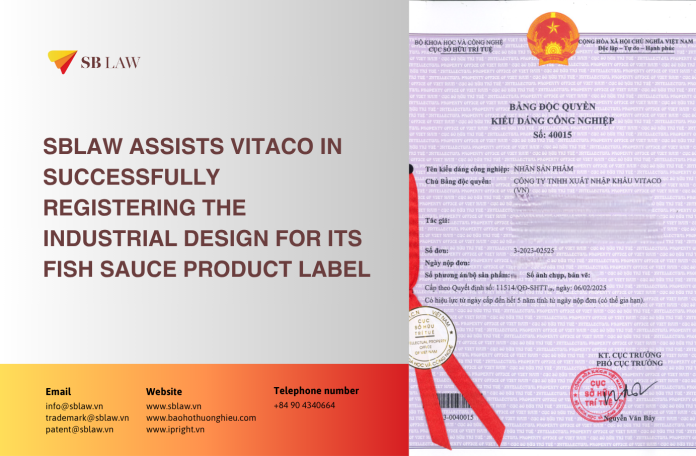
SBLAW Assists VITACO in Successfully Registering the Industrial Design for Its Fish Sauce Product Label

SBLAW is honored to act as the intellectual property representative for VITACO Import-Export Co., Ltd., assisting in the successful registration and protection of the industrial design for its fish sauce product label.

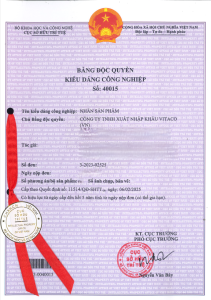
Filed under application No. 3-2023-02525 with the Intellectual Property Office of Vietnam on October 26, 2023, the design was officially granted Industrial Design Patent No. 40015 on February 6, 2025.

SBLAW Assists VITACO in Successfully Registering the Industrial Design for Its Fish Sauce Product Label

In today’s dynamic market, where countless fish sauce products compete with diverse packaging and label designs, winning over consumers goes beyond product quality. First impressions now matter more than ever — and they often start with the product’s appearance, especially its design and labeling.

A well-designed, distinctive, and refined packaging not only helps a product stand out on store shelves but also leaves a lasting impression in the minds of consumers. It plays a vital role in brand positioning and contributes significantly to building a sustainable competitive edge. Therefore, securing industrial design protection has become a strategic step for businesses wishing to safeguard their brand identity and product distinctiveness.

Recognizing the importance of this, VITACO entrusted SBLAW as its legal partner to provide consultation and carry out the procedures for registering the industrial design of its fish sauce product label.

SBLAW Assists VITACO in Successfully Registering the Industrial Design for Its Fish Sauce Product Label

From the initial steps of conducting design searches and assessing registrability to preparing the application and obtaining the official Certificate of Industrial Design Registration from the Intellectual Property Office of Vietnam, SBLAW’s team of attorneys implemented a well-structured, professional, and time-efficient process that ensured full compliance with all legal requirements.

Thanks to its practical experience and proactive strategic approach, SBLAW successfully assisted VITACO in completing the entire registration procedure smoothly and effectively.

With over a decade of experience in the field of intellectual property, SBLAW proudly stands as a trusted legal partner for numerous Vietnamese businesses in their journey to protect brand identity and market presence.

If your business is seeking solutions for protecting product designs or trademarks in Vietnam or international markets, don’t hesitate to contact SBLAW for expert advice and the most comprehensive and effective legal solutions.

All Trademark Protection Services at SBLAW

SBLAW has been one of the upscale Intellectual Property Firms with an established reputation in the registration and enforcement of IP rights for over 15 years. 


By safeguarding your organization’s trademarks and service marks, we commit to maintaining your brand identity. 


We endeavour to provide efficacious and systematic services to our clients, catering to their legal trademark-related needs in the best possible way.


We assist our clients in determining the availability of their proposed trademarks for use and registration across the globe.


Also, we have a dedicated team for Trademark with expert Trademark Agents & Attorneys.


Our trademark services extend from inception and registration to policing and enforcement.


We assist our clients in drafting and filing trademarks before both the national and international Trademark Offices globally.


Furthermore, we extend our services for Trademark Search, Trademark Drafting & Trademark Filing, etc. 


Here’s a quick look at our Trademark Protection Services:


Service Offerings

Trademark Search (Use & Availability Or Clearance ) Attending Hearing For Opposition Proceedings
Trademark Landscape Search and Analysis Trademark Drawings
Trademark Filing (Per Class) Extension Of Time for Opposition Process
Reporting, Preparing & Trademark Filing Response Trademark Renewal (After every 10 years)
Attending Hearing With Examiner Trademark Monitoring
Trademark Re-Classification Filing Notice Of Opposition For Each Class Opposed (Third Party Opposition)
Trademark Refusal

Procedures for announcement of standard conformity for construction materials

Situation: We are Company A, a limited liability company specializing in importing and distributing construction materials. Currently, our company is preparing to introduce a line of high-end imported tiles to the market. Based on advice from a relative, to ensure compliance with current Vietnamese legal regulations, we want to carry out the procedures for announcing standard conformity for this product. Therefore, I would like to ask the lawyer about what standard conformity announcement is? What are the procedures and types of dossiers required for announcing standard conformity for product materials as stipulated?


Answer:


1. Overview of Standard Conformity Announcement

According to Clause 1, Article 3 of Circular 28/2012/TT-BKHCN: Announcement of standard conformity means announcement by an organization or individual of the conformity of objects of activities in the domain of standard with relevant standards.

Article 7 of Circular 28/2012/TT-BKHCN states the principles for applying standard conformity announcements as follows:

  • The subjects of standard conformity announcements are products, goods, services, processes, or environments specified in the corresponding standards.
  • It is a voluntary activity.
  • The announcement of conformity with the corresponding standards is based on:
  • The results of standard conformity certification conducted by a registered certification organization; or
  • The results of self-assessment of conformity by the announcing organization.
  • Testing for the purpose of standard conformity assessment must be carried out at a registered testing organization.

Legal Basis: Clause 1, Article 3 and Article 7 of Circular 28/2012/TT-BKHCN.


2. Dossier for Registering Standard Conformity Announcement

According to Article 9 of Circular 28/2012/TT-BKHCN the organization announcing standard conformity shall prepare two sets of the dossier:

  • 01 set is submitted directly or sent via postal service to the Sub-Department of Standards, Metrology, and Quality at the local level.
  • 01 set is kept at the organization.

Depending on the basis for conformity assessment, the dossier includes:

  1. In case the announcement is based on the results of standard conformity certification by a registered certification organization (third party), the dossier includes:
  • The standard conformity announcement form (as per Form 2. CBHC/HQ in Appendix III – Circular 28/2012/TT-BKHCN);
  • A certified true copy of the documents proving the production and business activities of the announcing organization (Enterprise Registration Certificate/Business Registration Certificate);
  • A certified true copy of the standard used as the basis for the announcement;
  • A certified true copy of the Standard Conformity Certificate issued by the registered certification organization, accompanied by the conformity mark sample.

Note: During the review process, if necessary, the original documents may be examined for comparison, or additional certified copies may be requested.

  1. In the case where the standard conformity announcement is based on the self-assessment results of the producing and trading organization (first party), the dossier includes:
  • The standard conformity announcement form (as per Form 2. CBHC/HQ in Appendix III – Circular 28/2012/TT-BKHCN);
  • A certified true copy of the documents proving the production and business activities of the announcing organization (Enterprise Registration Certificate);
  • A certified true copy of the standard used as the basis for the announcement;
  • Considering whether the announcing organization has or has not been granted a certificate of conformity with management system standards (ISO 9001, ISO 22000, HACCP, etc.) by a registered certification organization:
  • If not granted a certificate: must have the production process accompanied by a quality control plan that has been established and applied (as per Form 1. KHKSCL – Appendix III of Circular 28/2012/TT-BKHCN) and a management system monitoring plan;
  • If granted a certificate: must have a certified true copy of the valid Certificate of Conformity with management system standards;
  • The standard conformity assessment report (as per Form 5. BCĐG – Appendix III of Circular 28/2012/BKHCN) accompanied by a certified true copy of the test result sheet for samples within 12 months prior to the submission date of the standard conformity announcement dossier from a registered testing organization.

Note: During the review process, if necessary, the original documents may be examined for comparison, or additional certified copies may be requested.

Legal Basis: Article 9 of Circular 28/2012/BKHCN.


3. Procedures for Announcement of Standard Conformity

According to Article 8 of Circular 28/2012/TT-BKHCN, the procedures for the Announcement of Standard Conformity are carried out as follows:

Step 1: Assessment of Conformity of the Subject of the Announcement with the Corresponding Standard (“Conformity Assessment”)

  • Conducted by:
  • A registered certification organization (third party); or
  • The organization making the announcement (first party).
  • The conformity assessment is carried out according to the conformity assessment method specified in Clause 1, Article 6 of this Circular.
  • The result of the conformity assessment serves as the basis for the organization to make the Announcement of Standard Conformity.

Legal Basis: Clause 1 Article 6 of Circular 28/2012/BKHCN

Step 2: Registration of the Announcement of Standard Conformity Dossier. The dossier is registered with the Department of Standards, Metrology, and Quality of the province or centrally-governed city where the producing organization has registered its enterprise or business household (hereinafter referred to as the “Department“).

 

4. Processing of the Announcement of Standard Conformity Dossier

According to Article 10 of Circular 28/2012/TT-BKHCN, after registering the Announcement of Standard Conformity dossier with the Department, the processing of the dossier is carried out as follows:

  • If the dossier is incomplete: within three (03) working days from the date of receiving the announcement of standard conformity dossier, the department shall issue a written notice requesting the organization making the announcement to supplement the required documents.

If after fifteen (15) working days from the date the Department sends the request, the enterprise has not fully supplemented the dossier as required, the Department has the right to cancel the processing of the dossier.

  • If the Dossier is Complete:
    Within five (05) working days from the date of receiving the Announcement of Standard Conformity dossier, the Department shall organize an inspection to verify the validity of the dossier:
  • If the dossier is complete and valid:
    The Department shall issue a Notice of Acceptance of the Announcement of Standard Conformity Dossier to the organization making the announcement.
  • If the dossier is complete but invalid:
    The Department shall issue a written notice to the enterprise stating the reasons for not accepting the dossier.

Legal Basis: Articles 8 and 10 of Circular 28/2012/TT-BKHCN.

Announcement of technical regulation conformity procedure for imported construction materials

Situation: I am currently the Director of Construction Company B, which produces and supplies construction materials. We are planning to import high-end tiles for construction and interior design. To ensure that the product complies with Vietnamese legal regulations, the administrative authorities require our company to conduct an Announcement of Technical Regulation Conformity for the product’s quality. I would like to ask the lawyer: What is the Announcement of Technical Regulation Conformity? Do I need to follow specific steps in the procedure, and what documents and files do I need to prepare?


Answer:


1. Overview of Announcement of Technical Regulation Conformity

According to Clause 2 Article 3 of Circular 28/2012/TT-BKHCN:  Announcement of standard conformity means announcement by an organization or individual of the conformity of objects of activities in the domain of standard with relevant standards.

Article 12 of Circular 28/2012/TT-BKHCN indicates the principles of application

  1. This applies to products, goods, services, processes, or environments specified in national technical regulations issued by sectoral ministries or in local technical regulations issued by the People’s Committees of provinces or centrally-run cities.
  2. Mandatory Nature: The Announcement of Technical Regulation Conformity is a compulsory activity.
  3. For imported goods, the announcement involves compliance with state inspection regulations on the quality of imported goods, as stipulated in this Circular.
  4. Basis for Announcement: The declaration of conformity is based on one of the following:
  • Certification of conformity issued by a designated certification body;
  • Self-assessment of conformity by the announcing organization;
  • Certification of conformity issued by a registered certification body or one recognized under legal provisions.

Notes:

  • Testing for conformity assessment must be conducted by a registered testing organization.
  • If using results from a foreign conformity assessment organization, it must be legally recognized or designated by the competent state authority.
  • If a product is subject to multiple technical regulations, the organization must register the announcement with the respective specialized agencies. The conformity mark can only be used after full compliance with all applicable regulations.

Legal Basis: Article 12 of Circular 28/2012/TT-BKHCN, amended by Circular 02/2017/TT-BKHCN.

2. Documentation for Announcement of Technical Regulation Conformity

According to Article 14 of Circular 28/2012/TT-BKHCN, the organization must prepare and submit the documentation directly or via postal service to the specialized agency designated by the sectoral ministry or the People’s Committee of the province or centrally-run city.

  • In the case of Announcement of Technical Regulation Conformity based on conformity certification results issued by a designated certification body (first party), the dossier shall include:
  • Conformity Announcement Form (Template 2. CBHC/HQ – Appendix III, Circular 28/2012/TT-BKHCN).
  • Self-Assessment report includes:
  • Name of the organization; address; telephone, fax;
  • Name of the product or good;
  • Code of the technical regulation;
  • Conclusion that the product complies with the technical regulation;
  • Commitment to quality compliance with the technical regulation and applicable standard, with full legal responsibility for the quality and self-assessment results.

Note: The report can be based on the organization’s own assessment or results from a registered conformity assessment organization.

  • In case the Announcement of Technical Regulation Conformity is based on certification results from a registered conformity assessment body or a designated certification organization (third party), the dossier shall include:
  • Conformity Announcement Form (Template 2. CBHC/HQ – Appendix III, Circular 28/2012/TT-BKHCN).
  • Certified Copy of the Conformity Announcement Form, issued by a registered or designated certification body, with the conformity mark.

Legal Basis: Article 14 of Circular 28/2012/TT-BKHCN.

3. Procedures for Announcement of Technical Regulation Conformity

For imported goods like your tiles, the procedures are outlined in Article 13 of Circular 28/2012/TT-BKHCN, depending on the assessment method:

a. Based on Self-Assessment (Clause 1, Article 13 Circular 28/2012/TT-BKHCN):

  • Register for quality inspection of imported goods, providing: Name of the importing organization, address, telephone, fax; Name of the goods, brand, model; Technical characteristics; Origin, manufacturer; Volume, quantity; Entry port; Import time; Contract; Packing List; Invoice; Bill of Lading; Import Declaration; Code of the technical regulation; Commitment to quality compliance with the technical regulation and applicable standard, with full legal responsibility.

Note: Within 01 working day after registering the quality inspection of imported goods on the organization’s registration form, the organization shall receive confirmation from the competent authority.

  • Submit the confirmed registration to customs for clearance.
  • Within 15 working days from customs clearance, submit the self-assessment results to the specialized agency.

Note: The organization shall be fully responsible for the self-assessment results and ensure that the goods conform to the declared technical regulations and applied standards. In case the goods fail to comply with the declared technical regulations or applied standards, the organization must promptly report to the competent authority and organize the handling or recall of such goods in accordance with legal provisions.

b. Based on Certification by a Registered or Recognized Certification Body (Clause 2, Article 13 Circular 28/2012/TT-BKHCN)

  • Register for quality inspection of imported goods, providing: Name of the importing organization, address, telephone, fax; Name of the goods, brand, model; Technical characteristics; Origin, manufacturer; Volume, quantity; Entry port; Import time; Contract; Packing List; Invoice; Bill of Lading; Import Declaration; Code of the technical regulation; Commitment to quality compliance with the technical regulation and applicable standard, with full legal responsibility.

Note: Within 01 working day after registering the quality inspection of imported goods on the organization’s registration form, the organization shall receive confirmation from the competent authority.

  • Submit the confirmed registration to customs for clearance.
  • Within 15 working days from clearance, submit a certified copy of the Conformity Certificate to the specialized agency. If assessed abroad, submit within 3 working days from clearance.
  • In cases where goods have been certified by a conformity assessment body in the exporting country, within 03 working days from the customs clearance date, the organization must submit a certified true copy of the Certificate of Conformity to Technical Regulations to the specialized regulatory authority.

Note: The organization shall be fully responsible for the self-assessment results and ensure that the goods conform to the applied technical regulations and announced standards. In case the goods fail to comply with the applied technical regulations or announced standards, the organization must promptly report to the competent authority and organize the handling or recall of such goods in accordance with legal provisions.

c. Based on Certification by a Designated Certification Body (Clause 3, Article 13 Circular 28/2012/TT-BKHCN)

  • Register for quality inspection of imported goods, providing: Name of the importing organization, address, telephone, fax; Name of the goods, brand, model; Technical characteristics; Origin, manufacturer; Volume, quantity; Entry port; Import time; Contract; Packing List; Invoice; Bill of Lading; Import Declaration; Code of the technical regulation; Commitment to quality compliance with the technical regulation and applicable standard, with full legal responsibility.
  • The competent authority issues the Notification of State Inspection Results on Imported Goods Quality.
  • After receiving the Notification of State Inspection Results on Imported Goods Quality, the organization shall submit a certified true copy of this Notification to the customs authority for goods clearance.

Legal Basis: Article 13 of Circular 28/2012/TT-BKHCN.

4. Processing of the Announcement of Technical Regulation Conformity Documentation

According to Article 15 of Circular 28/2012/BKHCN, after registering the documentation for the Announcement of Technical Regulation Conformity with the specialized agency, the processing of the documentation is carried out as follows:

  • Incomplete Documentation: Within three (03) working days from the date of receiving the documentation for the Announcement of Technical Regulation Conformity, the specialized agency shall issue a written notice requesting the organization making the announcement to supplement the required documents. If, after fifteen (15) working days from the date the specialized agency sends the request, the documentation is not fully supplemented as required, the specialized agency has the right to cancel the processing of the documentation.
  • Complete Documentation: Within five (05) working days from the date of receiving the documentation for the Announcement of Technical Regulation Conformity, the specialized agency shall organize an inspection to verify the validity of the documentation:
  • If the documentation is complete and valid:
    The specialized agency shall issue a Notice of Acceptance of the Documentation for the Announcement of Technical Regulation Conformity to the organization making the announcement.

Note: The Notice of Acceptance of the Documentation for the Announcement of Technical Regulation Conformity shall be valid for the same period as the Certificate of Technical Regulation Conformity issued by the designated certification body or for three (03) years from the date the organization’s leadership signs and confirms the Conformity Assessment Report (in the case of self-assessment of conformity by the organization).

  • If the documentation is complete but invalid: The specialized agency shall issue a written notice to the organization making the announcement, stating the reasons for not accepting the documentation.

Legal Basis: Article 15 of Circular 28/2012/TT-BKHCN


Announcement of technical regulation conformity procedure for imported construction materials

Situation: I am currently the Director of Construction Company B, which produces and supplies construction materials. We are planning to import high-end tiles for construction and interior design. To ensure that the product complies with Vietnamese legal regulations, the administrative authorities require our company to conduct an Announcement of Technical Regulation Conformity for the product’s quality. I would like to ask the lawyer: What is the Announcement of Technical Regulation Conformity? Do I need to follow specific steps in the procedure, and what documents and files do I need to prepare?


Answer:


1. Overview of Announcement of Technical Regulation Conformity

According to Clause 2 Article 3 of Circular 28/2012/TT-BKHCN:  Announcement of standard conformity means announcement by an organization or individual of the conformity of objects of activities in the domain of standard with relevant standards.

Article 12 of Circular 28/2012/TT-BKHCN indicates the principles of application

  1. This applies to products, goods, services, processes, or environments specified in national technical regulations issued by sectoral ministries or in local technical regulations issued by the People’s Committees of provinces or centrally-run cities.
  2. Mandatory Nature: The Announcement of Technical Regulation Conformity is a compulsory activity.
  3. For imported goods, the announcement involves compliance with state inspection regulations on the quality of imported goods, as stipulated in this Circular.
  4. Basis for Announcement: The declaration of conformity is based on one of the following:
  • Certification of conformity issued by a designated certification body;
  • Self-assessment of conformity by the announcing organization;
  • Certification of conformity issued by a registered certification body or one recognized under legal provisions.

Notes:

  • Testing for conformity assessment must be conducted by a registered testing organization.
  • If using results from a foreign conformity assessment organization, it must be legally recognized or designated by the competent state authority.
  • If a product is subject to multiple technical regulations, the organization must register the announcement with the respective specialized agencies. The conformity mark can only be used after full compliance with all applicable regulations.

Legal Basis: Article 12 of Circular 28/2012/TT-BKHCN, amended by Circular 02/2017/TT-BKHCN


2. Documentation for Announcement of Technical Regulation Conformity

According to Article 14 of Circular 28/2012/TT-BKHCN, the organization must prepare and submit the documentation directly or via postal service to the specialized agency designated by the sectoral ministry or the People’s Committee of the province or centrally-run city.

  • In the case of Announcement of Technical Regulation Conformity based on conformity certification results issued by a designated certification body (first party), the dossier shall include:
  • Conformity Announcement Form (Template 2. CBHC/HQ – Appendix III, Circular 28/2012/TT-BKHCN).
  • Self-Assessment report includes:
  • Name of the organization; address; telephone, fax;
  • Name of the product or good;
  • Code of the technical regulation;
  • Conclusion that the product complies with the technical regulation;
  • Commitment to quality compliance with the technical regulation and applicable standard, with full legal responsibility for the quality and self-assessment results.

Note: The report can be based on the organization’s own assessment or results from a registered conformity assessment organization.

  • In case the Announcement of Technical Regulation Conformity is based on certification results from a registered conformity assessment body or a designated certification organization (third party), the dossier shall include:
  • Conformity Announcement Form (Template 2. CBHC/HQ – Appendix III, Circular 28/2012/TT-BKHCN).
  • Certified Copy of the Conformity Announcement Form, issued by a registered or designated certification body, with the conformity mark.

Legal Basis: Article 14 of Circular 28/2012/TT-BKHCN.


3. Procedures for Announcement of Technical Regulation Conformity

For imported goods like your tiles, the procedures are outlined in Article 13 of Circular 28/2012/TT-BKHCN, depending on the assessment method


a. Based on Self-Assessment (Clause 1, Article 13 Circular 28/2012/TT-BKHCN):

  • Register for quality inspection of imported goods, providing: Name of the importing organization, address, telephone, fax; Name of the goods, brand, model; Technical characteristics; Origin, manufacturer; Volume, quantity; Entry port; Import time; Contract; Packing List; Invoice; Bill of Lading; Import Declaration; Code of the technical regulation; Commitment to quality compliance with the technical regulation and applicable standard, with full legal responsibility.

Note: Within 01 working day after registering the quality inspection of imported goods on the organization’s registration form, the organization shall receive confirmation from the competent authority.

  • Submit the confirmed registration to customs for clearance.
  • Within 15 working days from customs clearance, submit the self-assessment results to the specialized agency.

Note: The organization shall be fully responsible for the self-assessment results and ensure that the goods conform to the declared technical regulations and applied standards. In case the goods fail to comply with the declared technical regulations or applied standards, the organization must promptly report to the competent authority and organize the handling or recall of such goods in accordance with legal provisions


b. Based on Certification by a Registered or Recognized Certification Body (Clause 2, Article 13 Circular 28/2012/TT-BKHCN)

  • Register for quality inspection of imported goods, providing: Name of the importing organization, address, telephone, fax; Name of the goods, brand, model; Technical characteristics; Origin, manufacturer; Volume, quantity; Entry port; Import time; Contract; Packing List; Invoice; Bill of Lading; Import Declaration; Code of the technical regulation; Commitment to quality compliance with the technical regulation and applicable standard, with full legal responsibility.

Note: Within 01 working day after registering the quality inspection of imported goods on the organization’s registration form, the organization shall receive confirmation from the competent authority.

  • Submit the confirmed registration to customs for clearance.
  • Within 15 working days from clearance, submit a certified copy of the Conformity Certificate to the specialized agency. If assessed abroad, submit within 3 working days from clearance.
  • In cases where goods have been certified by a conformity assessment body in the exporting country, within 03 working days from the customs clearance date, the organization must submit a certified true copy of the Certificate of Conformity to Technical Regulations to the specialized regulatory authority.

Note: The organization shall be fully responsible for the self-assessment results and ensure that the goods conform to the applied technical regulations and announced standards. In case the goods fail to comply with the applied technical regulations or announced standards, the organization must promptly report to the competent authority and organize the handling or recall of such goods in accordance with legal provisions.


c. Based on Certification by a Designated Certification Body (Clause 3, Article 13 Circular 28/2012/TT-BKHCN)

  • Register for quality inspection of imported goods, providing: Name of the importing organization, address, telephone, fax; Name of the goods, brand, model; Technical characteristics; Origin, manufacturer; Volume, quantity; Entry port; Import time; Contract; Packing List; Invoice; Bill of Lading; Import Declaration; Code of the technical regulation; Commitment to quality compliance with the technical regulation and applicable standard, with full legal responsibility.
  • The competent authority issues the Notification of State Inspection Results on Imported Goods Quality.
  • After receiving the Notification of State Inspection Results on Imported Goods Quality, the organization shall submit a certified true copy of this Notification to the customs authority for goods clearance.

Legal Basis: Article 13 of Circular 28/2012/TT-BKHCN.


4. Processing of the Announcement of Technical Regulation Conformity Documentation

According to Article 15 of Circular 28/2012/BKHCN, after registering the documentation for the Announcement of Technical Regulation Conformity with the specialized agency, the processing of the documentation is carried out as follows:

  • Incomplete Documentation: Within three (03) working days from the date of receiving the documentation for the Announcement of Technical Regulation Conformity, the specialized agency shall issue a written notice requesting the organization making the announcement to supplement the required documents. If, after fifteen (15) working days from the date the specialized agency sends the request, the documentation is not fully supplemented as required, the specialized agency has the right to cancel the processing of the documentation.
  • Complete Documentation: Within five (05) working days from the date of receiving the documentation for the Announcement of Technical Regulation Conformity, the specialized agency shall organize an inspection to verify the validity of the documentation:
  • If the documentation is complete and valid:
    The specialized agency shall issue a Notice of Acceptance of the Documentation for the Announcement of Technical Regulation Conformity to the organization making the announcement.

Note: The Notice of Acceptance of the Documentation for the Announcement of Technical Regulation Conformity shall be valid for the same period as the Certificate of Technical Regulation Conformity issued by the designated certification body or for three (03) years from the date the organization’s leadership signs and confirms the Conformity Assessment Report (in the case of self-assessment of conformity by the organization).

  • If the documentation is complete but invalid: The specialized agency shall issue a written notice to the organization making the announcement, stating the reasons for not accepting the documentation.

Legal Basis: Article 15 of Circular 28/2012/TT-BKHCN


SBLAW is one of the leading firms based in Vietnam engaged in the practice of Intellectual Property law.

SBLAW is one of the leading firms based in Vietnam engaged in the practice of Intellectual Property law.


Our services are wide-ranging covering various aspects of prosecution, registration and enforcement of Intellectual Property rights which encompasses Trademark, Patents, Designs, Copyrights, Anti-Counterfeit/ Infringement, Watch Services as well as services related to Trade Names, Domain Names and Business Management Consultancy.


Our firm has grown to become one of the dominant Intellectual Property firms enjoying long-standing relationships with affiliated offices in China, Asean, EU and USA.

We have a team of experienced and professional staffs specialized in their relevant field of practice, each of them supported by dedicated and experienced assistance. The firm is committed to its clients need and satisfies them with utmost attention and professional services at all times.

We will be delighted to assist you in registering or in any matters related to your client’s trademarks, patents, designs and copyrights in Vietnam and ASEAN countries.

Vietnam Intellectual Property Research Institute Renamed and Restructured: A New Step Forward in the National Intellectual Property System

Hanoi – The Vietnam Intellectual Property Research Institute (VIPRI), a key unit in the field of intellectual property (IP) in Vietnam, will officially enter a new stage of development with significant adjustments to its name, organizational structure, and mission. According to an announcement from the Ministry of Science and Technology, these changes aim to enhance operational efficiency and strengthen the Institute’s role in the national innovation system.

These adjustments are not merely administrative changes but also reflect a strategic direction in consolidating and developing the intellectual property sector in Vietnam. The changes include an official renaming (in Vietnamese), a strategic merger with another important research institute, and a new allocation of functions, tasks, and powers. All these changes will officially take effect from May 9, 2025.1 The issuance of these decisions on April 9, 2025, and their public announcement on May 8, 2025, demonstrate a preparedness and determination to swiftly implement these crucial adjustments.1

The “National Intellectual Property Institute”: New Vietnamese Name and Strategic Merger

One of the most notable changes is the renaming of the Institute in Vietnamese. Concurrently, an organizational merger aims to create a more robust institution, better capable of meeting the development requirements of the new era.


A. Renaming and Official Effective Date

According to the decisions of the Minister of Science and Technology, the Viện Khoa học sở hữu trí tuệ(Vietnam Intellectual Property Research Institute – former Vietnamese name) will officially change its Vietnamese name to Viện Sở hữu trí tuệ quốc gia (National Intellectual Property Institute).1 This new Vietnamese name will be used and legally effective from May 9, 2025.1 It is noteworthy that the established English transaction name, Vietnam Intellectual Property Research Institute (VIPRI), will be retained for this newly restructured entity (as per Article 1, Decision 520/QD-BKHCN).

The addition of “Quốc gia” (National) to the new Vietnamese name is not just a nominal change. In the context of Vietnamese state agencies, this often implies an elevation in status, a more central role, and a broader scope of responsibility nationwide. This suggests that the Viện Sở hữu trí tuệ quốc gia (now operating internationally as VIPRI) is expected to become a leading institution in scientific research and professional activities related to intellectual property, playing a guiding and coordinating role at the national level.


B. Organizational Merger: Combining Research and Technology Exploitation Capabilities

Along with the renaming, a significant structural change is the merger of the Vietnam Intellectual Property Research Institute with the Institute for Invention Research and Technology Exploitation to establish the Vietnam Intellectual Property Research Institute (VIPRI).1 The Institute for Invention Research and Technology Exploitation, whose contact information was previously known via the email address niptech@most.gov.vn, is a unit specializing in patent research and technology application.2

This merger is implemented under Decision No. 519/QD-BKHCN dated April 9, 2025, by the Minister of Science and Technology.1 This is a strategic move aimed at consolidating and leveraging the combined strengths of two units with complementary advantages. The Vietnam Intellectual Property Research Institute (VIPRI) has historically been known for its in-depth IP research, training, assessment, and valuation of intellectual assets.3Meanwhile, the Institute for Invention Research and Technology Exploitation has strengths in applied patent research and promoting the exploitation and commercialization of technology.

The merger of these two institutes is expected to create a more comprehensive IP institution, capable of more effectively linking scientific research and patent development with the application and exploitation of these achievements in production and business. The objectives of this merger may include optimizing resources and minimizing operational overlap between units, thereby enhancing the nation’s overall capacity to develop and effectively use intellectual assets, contributing practically to socio-economic development.


C. Summary Table of Key Changes

For the convenience of agencies, organizations, and individuals, below is a summary table of the key changes concerning the Vietnam Intellectual Property Research Institute:

Aspect of Change Previously Currently (Effective May 9, 2025) Effective Date Legal Basis
Vietnamese Name Viện Khoa học Sở hữu trí tuệ Viện Sở hữu trí tuệ quốc gia May 9, 2025 Decision No. 519/QD-BKHCN, Decision No. 520/QD-BKHCN dated April 9, 2025
English Name Vietnam Intellectual Property Research Institute (VIPRI) Vietnam Intellectual Property Research Institute (VIPRI) May 9, 2025 Article 1, Decision No. 520/QD-BKHCN dated April 9, 2025
Organizational Structure Vietnam Intellectual Property Research Institute (operating separately) and Institute for Invention Research and Technology Exploitation (operating separately) Merger of Vietnam Intellectual Property Research Institute and Institute for Invention Research and Technology Exploitation into a single Institute May 9, 2025 Decision No. 519/QD-BKHCN dated April 9, 2025
Functions, Tasks, Powers Defined by previous regulations for each Institute Defined by Decision No. 520/QD-BKHCN dated April 9, 2025, by the Minister of Science and Technology May 9, 2025 Decision No. 520/QD-BKHCN dated April 9, 2025

New Functions, Tasks, and Powers: Development Orientation of the National Intellectual Property Institute (VIPRI)

All regulations regarding the functions, tasks, powers, and detailed organizational structure of the Vietnam Intellectual Property Research Institute (VIPRI) after the merger are clearly stated in Decision No. 520/QD-BKHCN dated April 9, 2025, by the Minister of Science and Technology.1 This is the most crucial legal document defining the Institute’s role and scope of activities in the new phase.

Compared to the previous functions and tasks of the Vietnam Intellectual Property Research Institute (VIPRI), which focused on research, training, assessment, valuation, and legal consultation on intellectual property 3, and the Institute for Invention Research and Technology Exploitation, with its strengths in applied research and technology commercialization, Decision 520/QD-BKHCN outlines significant new and expanded points for the Vietnam Intellectual Property Research Institute (VIPRI) post-merger.

One of the most prominent new aspects is the emphasis on the function of “exploitation and development of intellectual assets, connecting the activities of exploiting and developing intellectual assets with technology transfer, application, and development to serve socio-economic development” (Article 1, Clause 1 of Decision 520/QD-BKHCN). This clearly demonstrates the goal of integrating the capabilities of the two former institutes, not only stopping at the creation and protection of intellectual assets but also promoting the practical application of intellectual assets to generate added value.

The task of “Researching and exploiting intellectual property information” (Article 2, Clause 4 of Decision 520/QD-BKHCN) is very detailed, indicating a strong investment and expansion compared to before. New or enhanced activities include:

  • In-depth analysis of patent information by industry and market, patent mapping, and research on strategic technology development trends.
  • Developing models and mechanisms to support universities, research institutes, and enterprises in commercializing and exploiting patents.
  • Researching technology identification, know-how from patents, and implementing design research, reverse engineering to improve, decode, master, and transfer technology.
  • Organizing activities to connect investors with patent owners and providing consultation on technology transfer and promotion of potential patents.

The field of “Scientific research on intellectual property and intellectual assets” is also supplemented with “exploitation of technology from patents, layout designs of semiconductor integrated circuits” (Article 2, Clause 5 of Decision 520/QD-BKHCN), reflecting the integration of expertise from the Institute for Invention Research and Technology Exploitation.

Overall, Decision 520/QD-BKHCN not only consolidates old tasks but also creates a new, more comprehensive strategic direction for the Vietnam Intellectual Property Research Institute (VIPRI). The new Institute will serve as a stronger connecting hub between research, intellectual property protection, and practical application, commercial exploitation, and technology transfer, aiming for a more complete and effective intellectual asset lifecycle.

Organizational Structure (According to Article 3 of Decision 520/QD-BKHCN)

  1. Institute Leadership:
  • The Vietnam Intellectual Property Research Institute (VIPRI) has a Director General and Deputy Director Generals.
  • The Director General is responsible to the Minister of Science and Technology and before the law for the results of performing the assigned functions, tasks, and powers.
  • Deputy Director Generals assist the Director General in directing and managing the assigned work areas of the Institute and are responsible to the Director General and before the law for the performance of assigned tasks.
  1. Organizational Apparatus:
  • General Affairs Department.
  • IP Assessment Department.
  • IP Asset Management Department.
  • IP Information Exploitation Department.
  • The functions, tasks, powers of the departments, and the working relationships between them are stipulated by the Director General.

With the merger of the Institute for Invention Research and Technology Exploitation, a unit specializing in technology application and transfer, the Vietnam Intellectual Property Research Institute (VIPRI) is expected to significantly enhance its capacity to promote the exploitation and commercialization of research results and intellectual assets. This means the Institute will not only focus on theoretical research or support for rights establishment but will also play a more active role in bringing inventions and utility solutions into life, contributing to economic value creation and fostering innovation within the business community and society. This combination promises to create a stronger bridge between scientific research, intellectual property protection, and practical application, thereby contributing more directly to Vietnam’s innovation ecosystem.

Significance and Vision: Elevating the Role of Intellectual Property in National Development

The restructuring and establishment of the Vietnam Intellectual Property Research Institute (VIPRI) carry significant importance, not only for the Institute itself but also for the entire intellectual property system and the socio-economic development of the country. This decision reflects the Government’s deepening recognition of the strategic role of intellectual property as a key driver for economic growth and enhancing national competitiveness in the context of international integration and the Fourth Industrial Revolution.

The emergence of a national intellectual property institute with enhanced scale and capacity, along with clearly defined functions, tasks, and powers in Decision 520/QD-BKHCN, is expected to bring tangible benefits to stakeholders. For the business community and innovators, a stronger national IP agency can provide more comprehensive support services, from research, consultation, training, and assessment to assistance in exploiting and commercializing intellectual assets. This will create more favorable conditions for protecting and leveraging the value of creative achievements. For researchers and universities, the new Institute can become an important partner in promoting applied research and technology transfer. Overall, the merger and upgrading of the Institute will contribute to building a more effective national intellectual property system, more closely linking the stages from knowledge creation to practical application.

Although the documents do not specifically mention links to national strategies, the restructuring of such an important agency is usually part of an overall plan to strengthen science, technology, and innovation capacity. The effective date in 2025 may also suggest the preparation of resources and institutions to implement development goals in the country’s subsequent planning periods. This is a step consistent with the general trend of many developing countries, which view investment in the intellectual property system as a fundamental factor for promoting a knowledge-based and innovative economy.

Important Information for Relevant Agencies, Units, and Individuals

To ensure effective coordination and timely information updates, relevant agencies, units, organizations, and individuals should note the following:

  1. Effective date of changes: From May 9, 2025, the Vietnam Intellectual Property Research Institute will officially operate under the new Vietnamese name Viện Sở hữu trí tuệ quốc gia (continuing with the English name Vietnam Intellectual Property Research Institute – VIPRI), with its organizational structure, functions, tasks, and powers defined according to the new decisions.1 All transactions, work contacts, and related matters should be adjusted according to this new information.
  2. Legal basis:
  • The merger of the Vietnam Intellectual Property Research Institute and the Institute for Invention Research and Technology Exploitation into the Vietnam Intellectual Property Research Institute (VIPRI) is implemented under Decision No. 519/QD-BKHCN dated April 9, 2025, by the Minister of Science and Technology.1
  • The functions, tasks, powers, and organizational structure of the Vietnam Intellectual Property Research Institute (VIPRI) are detailed in Decision No. 520/QD-BKHCN dated April 9, 2025, by the Minister of Science and Technology.1
  1. Accessing full texts: Agencies, units, and individuals wishing to understand the details of the aforementioned decisions can refer to the Portal of the Ministry of Science and Technology or the Official Gazette as prescribed.1 The original announcement of the renaming also includes a link to download the full announcement.1
  2. Updating information: Relevant parties should regularly monitor information on the official website of the Vietnam Intellectual Property Research Institute (currently vipri.gov.vn) and subsequently the website of the Vietnam Intellectual Property Research Institute (VIPRI) to update guidelines, contact information, and specific changes (if any) during the transition and operation of the new Institute.

The official announcement from the Vietnam Intellectual Property Research Institute emphasized “informing agencies, units, organizations, and individuals to be aware and coordinate the implementation of tasks”.1 This indicates that relevant parties are responsible for proactively updating and adjusting their activities in accordance with this change. The period from when the decisions were issued (April 9, 2025) to the public announcement (May 8, 2025) and the effective date (May 9, 2025) is relatively short.1 This requires proactivity and speed in disseminating information and preparation from both the Institute’s side and its partners and the community to ensure a smooth transition without disrupting important activities.

Conclusion: Towards a Strong and Effective National Intellectual Property System

The renaming of the Vietnam Intellectual Property Research Institute to Viện Sở hữu trí tuệ quốc gia (while retaining the English name Vietnam Intellectual Property Research Institute – VIPRI), along with the merger and repositioning of its functions and tasks, is a significant development step, demonstrating the determination of the Ministry of Science and Technology to consolidate and enhance the capacity of the system of science and technology organizations in general and the intellectual property field in particular.

These changes, effective from May 9, 2025, along with the detailed provisions in Decision 520/QD-BKHCN, are expected to create a leading IP research and development agency that is more capable, operates more efficiently, and contributes more actively to the cause of science and technology development, innovation, and national economic growth. The emergence of the Vietnam Intellectual Property Research Institute (VIPRI) with a new mission and vision promises to contribute to building an increasingly strong national intellectual property system, meeting the requirements of the new development phase and extensive international integration. This is a testament to the growing recognition of the strategic importance of intellectual assets for Vietnam’s prosperity and competitiveness on the international stage. Concerned agencies, businesses, and individuals should closely follow official announcements to update information and coordinate effectively.

Brand Identity for World Intellectual Property Day 2025

To affirm the crucial role of intellectual property in economic and social life and to raise public awareness, the World Intellectual Property Organization (WIPO) has designated April 26 each year as “World Intellectual Property Day” (IP Day). This occasion celebrates the contributions of creativity and innovation to the collective progress of humanity.

Mẫu ảnh đơn trên web

For 2025, WIPO has announced the main theme of IP Day: “IP and Music: Feel the Beat of IP.” This event is an opportunity to honor creators, inventors, and entrepreneurs—those who continuously push boundaries to bring inspiring musical works that connect communities and drive innovation.

To support the celebration of IP Day 2025, WIPO has designed a theme-based brand identity, available at: https://trello.com/b/SxfvWiKw/world-ip-day-2025-social-media-kit

Additionally, some Vietnamese-language design templates have been compiled by the Vietnam Intellectual Property Office and can be accessed at: https://drive.google.com/drive/u/0/folders/1S04AArljEV8SEKL3gfAX56vYF9-kDzZ2

The Vietnam Intellectual Property Office will collaborate with agencies, organizations, and IP professionals to make IP Day 2025 a truly meaningful event!

Successful Copyright Registration for Membership 4.0 Software by Membee Technology Joint Stock Company

Thumbnail team IP
Thumbnail team IP

As the digital economy continues to grow and competition intensifies, protecting intellectual property has become a crucial factor for every pioneering business. Creativity is a driving force for development and a valuable asset that must be strictly safeguarded.

Recently, SBLAW successfully assisted Membee Technology Joint Stock Company in registering the copyright for its software Membership 4.0 – a modern membership management solution that Membee acquired. This strategic move helps Membee affirm its legal ownership of this technological product while also laying a solid foundation for future development.

<center><i><i>Certificate of Copyright Registration for the Computer Software Work Membership 4.0<center><i><i>
Certificate of Copyright Registration for the Computer Software Work Membership 4.0

Membership 4.0 is an advanced membership management software designed to help organizations and businesses efficiently manage their members. With intelligent features, the software optimizes operational processes, enhances user experience, and ultimately improves business performance.

In the rapidly evolving world of technology, protecting software copyrights is of utmost importance. Copyright registration enables Membee to prevent unauthorized copying and establishes a strong competitive edge in the market.

SBLAW is a law firm specializing in intellectual property, with years of experience in assisting businesses with copyright registration, trademarks, and patents. Throughout the collaboration with Membee, SBLAW provided comprehensive legal consultation, prepared all necessary documentation, and applied to the Copyright Office to ensure Membership 4.0 is legally protected.

Membee’s successful copyright registration for Membership 4.0 is clear proof of the significance of intellectual property protection in the digital age. If your business is also looking to safeguard its software or creative products, do not hesitate to contact SBLAW for expert consultation!


Successful Copyright Registration for the Logo Design of Dai Phuc Loc Tho Import-Export Trading and Services Co., Ltd.

Thumbnail team IP
Thumbnail team IP

In an increasingly competitive market, protecting intellectual property is the key to helping businesses assert their position and achieve sustainable growth. A logo is not only a symbol of brand identity but also an invaluable asset that needs to be protected to avoid the risk of being copied or infringed upon.

Recognizing this, Dai Phuc Loc Tho Import-Export Trading and Services Co., Ltd. proactively registered the copyright for its logo design, marking an important step in its strategy to protect the brand and enhance its competitive advantage.


<center><i><i>Certificate of Copyright for the Logo Design Work of Dai Phuc Loc Tho Import-Export Trading and Services Co., Ltd.<center><i><i>
Certificate of Copyright for the Logo Design Work of Dai Phuc Loc Tho Import-Export Trading and Services Co., Ltd.

As a leading company in the fields of trade, services, and import-export, Dai Phuc Loc Tho is constantly expanding its market, optimizing its supply chain, and committing to delivering high-quality products and services that meet international standards. With a broad network of partners, the company has built a solid foundation, asserting its reputation in the industry.

Registering the copyright for the logo not only helps protect the brand from copying but also establishes a solid legal foundation, enhancing trust with partners and customers. This long-term strategy contributes to increasing the brand’s value in the market.

With extensive experience in intellectual property, SBLAW has accompanied Dai Phuc Loc Tho throughout the copyright registration process, from legal consultation and document preparation to completing the protection procedures. Thanks to its professionalism and dedication, SBLAW successfully helped the company protect its brand assets and assert its position in the market.

Registering the copyright for the logo is a strategic and essential move in modern business. If your company is looking for comprehensive solutions to protect its brand, contact SBLAW for expert consultation and support!

Successful Registration of the “G.O.C FARM” Trademark in Japan

In the context of increasingly deep globalization, establishing a brand’s position in the international market is not only a goal but also a vital factor for businesses. Particularly, in strict markets such as Japan, trademark registration is not merely a legal procedure but also a robust shield protecting intellectual property and corporate reputation. With strategic vision and thorough preparation, G.O.C Export Food Processing Joint Stock Company collaborated with SBLAW on the journey to successfully register the “G.O.C FARM” trademark in Japan – marking a significant milestone in their global market expansion strategy.

Japan – one of the world’s leading economies – is renowned for its stringent legal system, especially in the field of intellectual property. Trademark registration in this country helps businesses like G.O.C not only prevent the risk of brand appropriation but also enhance credibility and trust from Japanese customers and partners. Reality has shown that many Vietnamese brands expanding into Japan without timely protection have faced prolonged disputes or even lost the right to use their trademarks in this highly potential market.

Successful Registration of the “G.O.C FARM” Trademark in Japan

Aware of these challenges and opportunities, G.O.C chose SBLAW – one of Vietnam’s leading legal consulting firms – as a trusted partner throughout the trademark registration process. From the initial stage of conducting searches, assessing protection feasibility, and preparing applications to the receipt of the official certificate, SBLAW provided a professional, systematic, and time-efficient process. Thanks to proactive strategy and extensive experience, SBLAW helped G.O.C FARM complete the registration process in Japan in less than a year – an impressive achievement in the field of international intellectual property.

Beyond registration, SBLAW also provided comprehensive consulting on long-term brand protection strategies in Japan, helping G.O.C FARM avoid potential legal risks in the future while laying a solid foundation for sustainable development in the international market.

With over a decade of experience in intellectual property, SBLAW is proud to deliver professional, effective, and reliable consulting services. The success of G.O.C FARM in Japan is not only a testament to the quality of our services but also a motivation for SBLAW to continue accompanying many Vietnamese businesses on their journey to conquer the global market.

If your business is looking for solutions to protect your brand in Japan or any other country, contact SBLAW immediately to receive in-depth consulting and the most optimal legal solutions.

SBLAW SUCCESSFULLY REGISTERS COPYRIGHT FOR “CRAB HOTPOT”

z6421979925362_fef078e99f4bf08042adc22d0616362f

For over two decades in Vietnam, Chris Freund, the founder and CEO of Mekong Capital, has not only played a crucial role in transforming the investment market but has also left a mark with renowned brands such as  Pizza 4P’s, Pharmacity, F88, and YOLA. Beyond his role as an investor, he authored the book Crab Hotpot, a work that blends fiction and reality, reflecting his and Mekong Capital’s journey of overcoming challenges. With its creative value and inspirational significance, securing copyright protection for this work is a crucial step in safeguarding the author’s rights as well as the integrity of its content.

“Copyright Registration Certificate for Crab Hotpot”

Recognizing the potential risks associated with unauthorized copying or use of creative content, Mekong Capital entrusted SBLAW as its legal advisor in the copyright registration process for the translated version of Chuyện Lẩu Cua. With extensive expertise in intellectual property, SBLAW assisted Mekong Capital in completing the necessary legal procedures, ensuring that the work is comprehensively protected under Vietnamese law.

Copyright registration not only helps Mekong Capital prevent infringement but also lays a solid foundation for the effective and sustainable commercial exploitation of the book. This ensures protection against unauthorized reproduction while reinforcing the book’s value and influence within the business and investment communities.

SBLAW – A Trusted Partner in Intellectual Property Successfully Helps Mekong Capital Protect the Copyright for Chuyện Lẩu Cua
SBLAW – A Trusted Partner in Intellectual Property Successfully Helps Mekong Capital Protect
                                                             

Released in January 2022, Crab Hotpot is a 68-page story about a group of crabs in a boiling hotpot trying to escape and reunite with their families. Beyond its fictional nature, the story conveys profound lessons on perseverance, innovative thinking, and leadership—core values that have enabled Chris Freund and Mekong Capital to overcome challenges and achieve success. The book was translated into Vietnamese by the author from the original comic Crab Hotpot, showcasing a strong commitment to creativity and intellectual property protection.

With extensive experience in copyright protection, SBLAW not only assists Mekong Capital in safeguarding intellectual assets but also supports many businesses in ensuring legal protection for creative works. The success of Crab Hotpot highlights the crucial role of copyright registration and marks a step forward in raising intellectual property awareness within Vietnam’s business community.

Currently, Crab Hotpot is available on various e-commerce platforms and nationwide bookstores, ready to inspire those seeking practical insights on leadership, innovation, and sustainable business strategies. With SBLAW’s support, this book is not only well-protected but also has the opportunity to reach a wider audience and maximize its impact.

Refer to more >> Trademark

Decree No. 24/2025/ND-CP: Amending and supplementing regulations on penalties for administrative violations in commerce and consumer protection

Decree No. 24/2025/ND-CP, issued on February 21, 2025, amends and supplements several articles of Decree No. 98/2020/ND-CP on penalties for administrative violations in commercial activities, production, trading in counterfeit and prohibited goods, and consumer protection. This Decree aims to update and adjust regulations on administrative penalties in these fields to ensure consistency and effectiveness in state management.


Key amendments and new provisions in Decree No. 24/2025/ND-CP compared to Decree No. 98/2020/ND-CP:

1. Supplementing penalties for the unauthorized transfer of consumer information: Decree No. 24/2025/ND-CP stipulates fines ranging from 100 to 200 million VND for organizations operating intermediary digital platforms that fail to verify the identity of entities selling products, goods, or services on their platform.

2. Increased penalties for discrimination against vulnerable consumers: The new Decree imposes fines of up to 70 million VND for acts of stigmatization or discrimination against vulnerable consumers.

3. Regulations on penalties for failing to fulfill warranty and maintenance obligations: Decree No. 24/2025/ND-CP introduces penalties for failing to fulfill or fully perform warranty and maintenance obligations for products and goods as prescribed by law.

4. Adjusting penalties for misleading advertisements: The Decree increases fines for false advertising that misleads consumers, aiming to ensure transparency and honesty in commercial advertising.

5. Supplementing regulations on business entities’ responsibilities in consumer protection: The new regulations emphasize the obligations of businesses to provide accurate information on products, goods, and services and to resolve consumer complaints.

Decree No. 24/2025/ND-CP: Amending and supplementing regulations on penalties for administrative violations in commerce and consumer protection

These amendments aim to enhance consumer protection and improve state management efficiency in commerce.


However, in addition to the aforementioned new provisions, Decree No. 24/2025/ND-CP retains the regulations of Decree No. 98/2020/ND-CP regarding the handling of acts related to the production of counterfeit goods bearing fraudulent trademarks or packaging; the sale of counterfeit stamps, labels, and packaging; and the manufacturing of counterfeit stamps, labels, and packaging, which are recognized as intellectual property infringements on trademarks and industrial designs.

Specifically, administrative fines range from VND 2,000,000 to VND 50,000,000, depending on the value and unlawful profits gained from counterfeit goods, and from VND 300,000 to VND 50,000,000, depending on the quantity of counterfeit stamps, labels, and packaging. Double penalties will be imposed on counterfeit goods in sectors such as food, food additives, food processing agents, food preservatives, pharmaceuticals, medicinal ingredients, cosmetics, medical devices, helmets, disinfectants, chemicals, insecticides, veterinary medicines, fertilizers, animal feed, aquaculture products, plant protection products, plant varieties, construction cement, and steel.

Additionally, supplementary penalties may include:Confiscation of production equipment; revocation of business licenses or professional certifications; suspension of production activities. At the same time, all confiscated counterfeit goods will be destroyed, and violators will be required to return any unlawfully obtained profits from their violations.

Thus, Decree No. 24/2025/ND-CP continues to inherit and maintain the provisions of Decree No. 98/2020/ND-CP, enforcing penalties for intellectual property infringements related to trademarks and industrial designs, particularly in the production and sale of counterfeit goods, stamps, labels, and packaging. The Decree clearly outlines administrative fines and strict enforcement measures, especially for products concerning public health and safety.

UPDATE ON THE NEW EXAMINATION NOTIFICATION PROCESS FROM THE INTELLECTUAL PROPERTY OFFICE OF VIETNAM

On February 15, 2025, SBLAW, in its role as an industrial property representative, received numerous emails from the intellectual property office of Vietnam regarding notifications related to the examination process of applications submitted to the Office. Accordingly, applicants can visit the Office’s online search webiste, enter the code provided in the email, and download the notification file.

An important point highlighted in the email is that the electronic document will REPLACE THE PAPER VERSION. This can be considered as a significant advancement by the Vietnam IP Office in applying information technology to the examination process of applications submitted to the Office. This development aligns with the practical trends observed in other countries worldwide.